Website Development Services
We build new websites and rework existing ones: structure, content, WordPress or Next.js development, integrations, launch preparation, and a sound foundation for search.
A new website, a rebuild, or the next stage of an existing one
We can join at different stages: build from scratch, replace an outdated site, or add the sections and functions the current project is missing.
A new website
We define the pages, choose the platform, and prepare the project for launch. This works for a new company, product, service, or business line.
A website rebuild
We keep useful content and functionality, remove the limits of the old version, and move the project onto a more suitable technical foundation.
New sections and functions
We can add a catalog, store, forms, filters, language versions, and integrations without rebuilding everything when the current platform allows it.
A site ready for promotion
We revise the structure, page templates, and technical setup so the site can be expanded, indexed, and promoted properly.
Websites we develop
We work with B2B and B2C projects. The right format depends on the task, the amount of content, and the functionality the site needs.
Landing pages
Single-page sites for a service, product, campaign, or event, with a clear path from the offer to an enquiry.
Corporate websites
Multi-page sites with services, company information, case studies, articles, and room to add more sections later.
Catalog websites
Categories, product or service cards, specifications, filters, and quote requests without a full checkout flow.
Online stores
Stores with a catalog, cart, checkout, payments, and customer accounts. The final scope follows the sales, delivery, and inventory process.
What website development includes
The scope follows the project. Before development starts, we document the pages, functions, integrations, and acceptance criteria so everyone is working toward the same result.
Understanding the task
We clarify what the site needs to do, who will use it, where visitors will come from, and which actions matter.
Market research
We review competitor pages and commercial content. When organic traffic matters, we also study queries and search results.
Site architecture
We define the sections, page hierarchy, navigation, and links between related content.
Page structure
We decide what each page needs to explain, in which order, and where the calls to action belong.
Content preparation
We can write and upload the content. Existing material can be edited and reorganized for the new site.
Prototype and visual direction
We agree on block placement and visual direction using finished layouts, references, or a working prototype.
Development and integrations
We build on WordPress or Next.js and connect forms, analytics, payments, CRM systems, and other approved services.
Content entry and launch
We populate the pages, check the main flows, deploy the site, and complete the agreed search setup.
We plan the site before development starts
Development starts with the pages and their purpose, not with the color of a button. We first need to understand what the site should contain and how people will use it.
We study the offer, audience, competitors, and available material. From that, we prepare the site map and the structure of the main pages. When the project is expected to attract organic traffic, we also account for search intent and the pages already competing in the results.
This work exposes missing sections early and reduces the chance of rebuilding completed pages immediately after launch.
We can work from finished designs, references, or a prototype
The visual workflow depends on what is already available and how much original design the project needs.
Finished Figma layouts
We implement approved layouts on the chosen platform and adapt them for different screen sizes.
References and a prototype
When no finished layouts exist, we agree on the page structure and visual direction using references and a prototype of the main pages.
A dedicated designer
Full custom design is not included automatically. If the project needs it, we discuss bringing in a specialist and add that work to the estimate.
We choose the platform around the job
We mainly work with WordPress and Next.js. The choice depends on the content, functionality, budget, and plans for the site after launch.
WordPress
- A practical fit for landing pages, corporate sites, catalogs, and online stores.
- Content editors can update pages and publish material through a familiar admin panel.
- Usually costs less and takes less time for standard website functionality.
Next.js
- A better fit for custom functions, integrations, and projects with a more demanding architecture.
- Supports flexible interfaces and efficient work with larger data sets.
- A content management system can be connected when editors need to update the site without changing code.
We explain which option fits the project and where each one has limitations before work begins.
Functions and services the site needs
A website can exchange data with the tools the company already uses. We agree on integrations before development or add them in later stages.
Enquiries
Send form submissions to email, Telegram, or another agreed channel.
CRM and webhooks
Pass leads and events into CRM systems and other internal workflows.
Payments and orders
Connect payment providers, carts, checkout flows, and order processing.
Catalogs and filters
Build structured catalogs, product cards, filters, and on-site search.
Accounts and private sections
Add customer accounts or restricted areas when the project requires them.
Interactive tools
Implement maps, calculators, forms, and other website-specific features.
Analytics
Connect the analytics and tracking tools included in the scope.
APIs and data exchange
Connect third-party APIs and arrange imports or exports between systems.
Responsive across devices
We adapt pages for phones, tablets, and desktop screens. Element sizes, navigation, and block layouts change with the available width so the site remains easy to use without zooming or hunting for hidden controls.
Before launch, we manually open the main pages on a computer and a phone. We check navigation, forms, links, content display, and the main user flows. This is a practical review of the finished site, not a separate professional QA engagement.
Speed, stability, and baseline security
We avoid unnecessary plugins, scripts, and dependencies that make a site harder to maintain. Images and resource loading are optimized for the chosen platform, and the implementation is kept understandable for later changes.
The baseline setup includes HTTPS, sensible access control, updates for the components we use, and basic form protection. We also keep heading structure and interactive controls understandable. A formal accessibility or security audit is a separate scope when a project requires one.
We do not promise a particular score in a third-party speed test. Acceptance is based on the agreed work and how the finished site performs in practice.
SEO is considered during development
It is easier to build a sound search foundation from the start than to repair it after launch. The exact setup follows the site and the approved scope.
Page and URL structure
We keep addresses understandable and arrange pages in a hierarchy that search systems can crawl.
Titles and metadata
We add page metadata and reusable templates for large sections where they are needed.
Internal links
Related pages are connected so visitors and crawlers can move through the site logically.
Technical directives
We configure canonical URLs, sitemap.xml, robots.txt, and indexing rules included in the project.
Structured data
Relevant Schema.org markup is added where the page type and available data support it.
Analytics and webmaster tools
We connect the agreed analytics and search tools when account access is available.
Search and AI readability
Clear structure and explicit content help search crawlers and AI systems understand what each page is about.
We preserve what already works
A rebuild or migration should not change every URL and remove old pages without a reason. Useful content may already receive traffic, links, or search visibility.
Before migration, we identify the pages and data that need to stay. We map old URLs to new ones, carry over useful content and metadata, and configure redirects. When the structure changes substantially, we prepare the migration map before launch.
Multilingual website development
We can add two or more language versions with separate pages, URLs, metadata, and links between equivalent content.
The structure does not have to be identical in every market. Services and messages can be adapted when the company presents itself differently in different countries. Translation and content preparation are agreed separately; existing translations can be uploaded and connected in the content management system.
How website development works
Discuss the task
You describe the project, required pages, functions, and current constraints. If a site already exists, we review it and the available material.
Define the scope
We document the pages, functions, integrations, and acceptance criteria, then agree on cost and working order.
Plan the structure
We prepare the site map and main page structures. Competitor and keyword research is added when the project needs it.
Prepare content and a prototype
We collect or write the content, define the block order, and agree on the visual direction.
Develop the site
We build the pages and functions on WordPress or Next.js and show the working version on a staging address.
Populate and connect
We add content and configure the approved forms, analytics, payments, CRM, and other services.
Review the result
We check the main pages and flows on a computer and phone. The client reviews the work against the agreed scope.
Launch
We deploy to the main domain, complete the final technical setup, and hand over the required access.
Timelines follow the actual scope
Two websites of the same type can require very different amounts of work. We estimate the schedule after the project contents are clear and update it if the scope changes.
Page templates
The number of distinct page types matters more than the raw page count.
Content readiness
Prepared text, images, and product data reduce the time spent waiting and reworking pages.
Visual preparation
Finished layouts move faster than a project that still needs a prototype and visual agreement.
Functions and integrations
Payments, CRM systems, accounts, filters, and custom data flows add development stages.
Migration and languages
Moving existing content, redirects, and additional language versions affect the schedule.
Approvals
The project moves faster when content and intermediate results are reviewed without long gaps.
Get a website development quote
Landing Page
A single page built for one offer, product, or event — the goal is conversion into a lead.
WordPress
$1,000 – $1,500
20–30 hours
6–10 UI blocks, mobile layout, forms wired to Telegram/email.
Next.js
$1,800 – $2,300
35–45 hours
Modular architecture, animation, deploy on Vercel/Cloudflare.
SEO growth: $300 – $500 one-time
Corporate Site
A multi-page company site: services, case studies, an about section, and a blog.
WordPress
$1,800 – $2,500
35–50 hours
Reusable UI block library, 4–6 page types (Home, Service, Case, About, Blog, Contact).
Next.js
$3,500 – $4,500
70–90 hours
Content management via an API, fast client-side navigation, and Schema.org markup.
SEO growth: $1,000 – $1,500 / month (20–30 hours/month)
Catalog
A multi-level product/service catalog with filtering and cards, quote-request instead of checkout.
WordPress
$2,500 – $3,500
50–70 hours
Custom post types, filter grid, spec fields.
Next.js
$4,500 – $6,000
90–120 hours
Instant client-side filtering, fast at large data volumes.
SEO growth: $1,500 – $2,000 / month (30–40 hours/month)
E-Commerce
A full store: cart, checkout, account area, and payment processing.
WordPress
$3,000 – $4,000
60–80 hours
WooCommerce, catalog templates, cart, checkout, Stripe/PayPal.
Next.js
$6,000 – $8,000+
120–160+ hours
Custom checkout, webhooks, isolated data layer.
SEO growth: $2,000 – $2,500+ / month (40+ hours/month)
What affects the final cost
The ranges above cover typical projects. We confirm the price after the pages, functionality, platform, and source materials are known.
Page templates
Ten similar catalog cards take less work than ten unrelated page layouts.
Platform
WordPress is usually more economical for standard sites. Next.js requires more development but supports more flexible architecture.
Content
Writing, editing, image preparation, and large content migrations are estimated as part of the actual scope.
Visual work
Development from approved designs differs from a project that first needs a prototype and visual direction.
Functions
Forms, filters, payments, accounts, CRM systems, APIs, and automated data exchange affect the estimate.
Migration and languages
Redirects, content transfer, and additional language versions add separate work.
What you receive after launch
We define the result before development starts. Acceptance is based on the agreed pages, functions, and criteria rather than a general impression.
A live website
The completed project is deployed to the agreed domain.
Approved pages and functions
The site includes the page types, forms, integrations, and flows recorded in the scope.
Published content
The agreed text, images, and structured data are placed on the site.
Content access
You receive access to content management when the selected platform and scope include it.
Connected services
Approved forms, analytics, payments, and other integrations are configured.
Search setup
The project includes the agreed indexing and analytics setup.
Working access
We hand over the access required to operate the completed site.
Clear next steps
Any later improvements are recorded instead of being mixed into the accepted scope.
Website work backed by practical experience
Since 2019
impik.dev has worked as a web development and growth studio
100+
completed projects across development, SEO, content, and integrations
5 years
our longest current client relationship
Why clients work with impik.dev
Several disciplines on one project
Development, SEO, and copywriting are coordinated instead of being split between unrelated contractors.
The stack follows the task
We work with both WordPress and Next.js and explain why one is more suitable before development starts.
Support remains optional
You can take over the finished site or continue with development, content, maintenance, and SEO.
We can keep developing the site after launch
The project can end with the handover of a finished website. You receive the agreed access and can manage it yourself or pass it to your own team.
If you need help later, we can add pages and functions, update content, resolve technical issues, connect more services, and work on SEO. This is useful when new offers, products, languages, or marketing priorities appear after launch.
Website development questions
WordPress is often enough for a standard corporate site, landing page, catalog, or store. Next.js makes more sense for custom functionality, deeper integrations, or a more demanding architecture. We recommend the platform after reviewing the task.
Full custom design by a dedicated designer is not included in every project. We can develop from finished layouts, agreed references, or a working prototype. If a project needs original design work, we discuss bringing in a specialist separately.
We can write the text, reorganize existing material, and populate the pages. The amount of content work is agreed before development.
Yes, when the current platform and code support the required changes. We first review the site, then recommend targeted improvements or a cleaner rebuild.
Yes. We review the layouts and required states before estimating the build. Missing screens or interactions are identified before work starts.
The schedule depends on page types, functionality, content readiness, and approval speed. We prepare an estimated timeline after the scope is defined.
We can include URL structure, metadata, indexing settings, internal links, and the required service files. Ongoing SEO work is a separate service.
Yes. We can configure language versions, separate URLs and metadata, and links between equivalent pages.
The client receives the working access agreed for the completed project. Repository, hosting, and third-party account handover are documented before work begins.
Yes. You can request a separate task or use an ongoing support format. Continued work is optional.
Websites We Have Developed
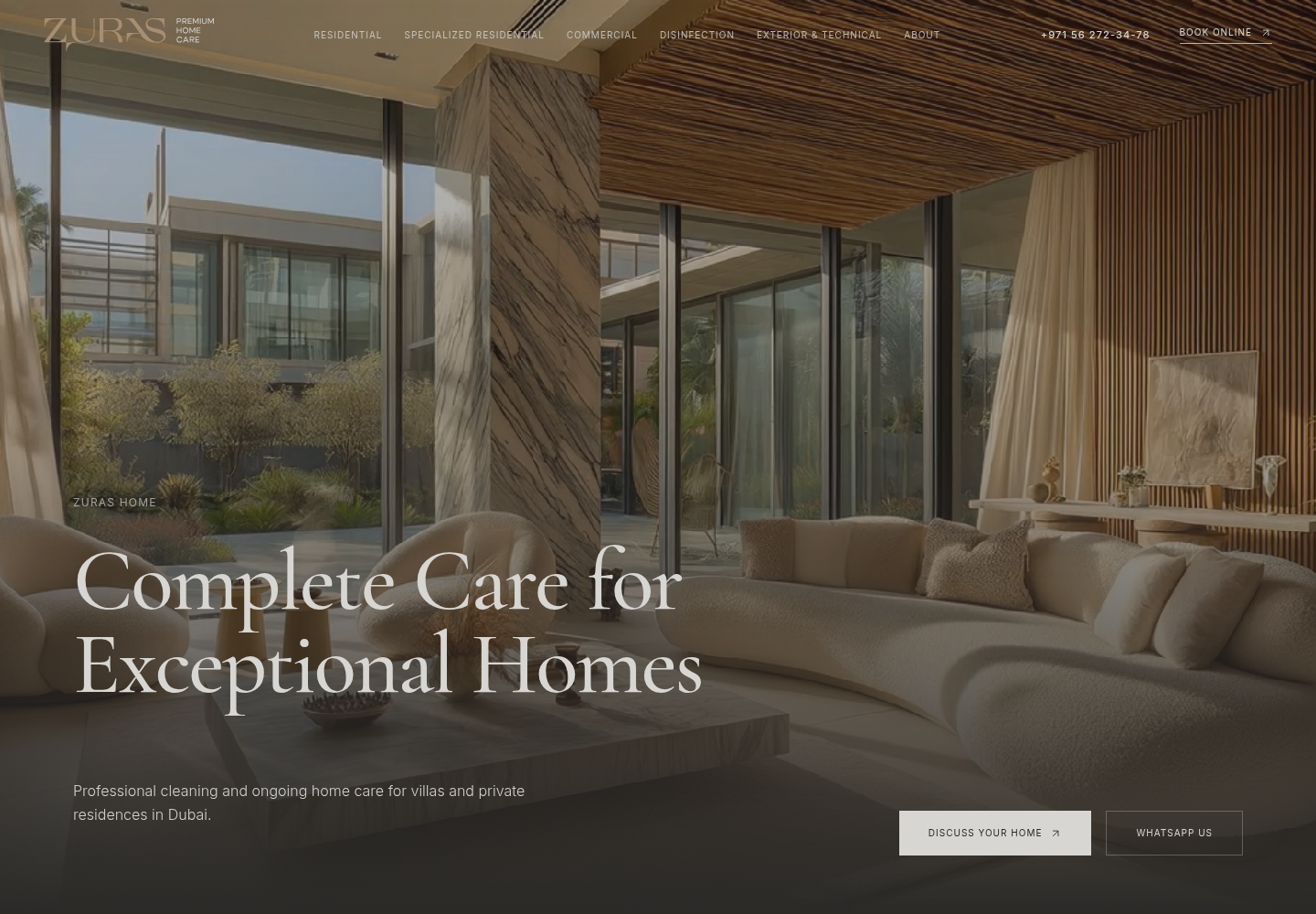
Building a Cleaning Company Website Around Search Demand
For a new cleaning company in Dubai, we researched search demand, grouped the queries into clusters, and used them to design the website structure.

Large multi-page website delivered in about two weeks
Search planning, structure, prototypes, content, development, and page population ran in parallel to meet a demanding launch date.
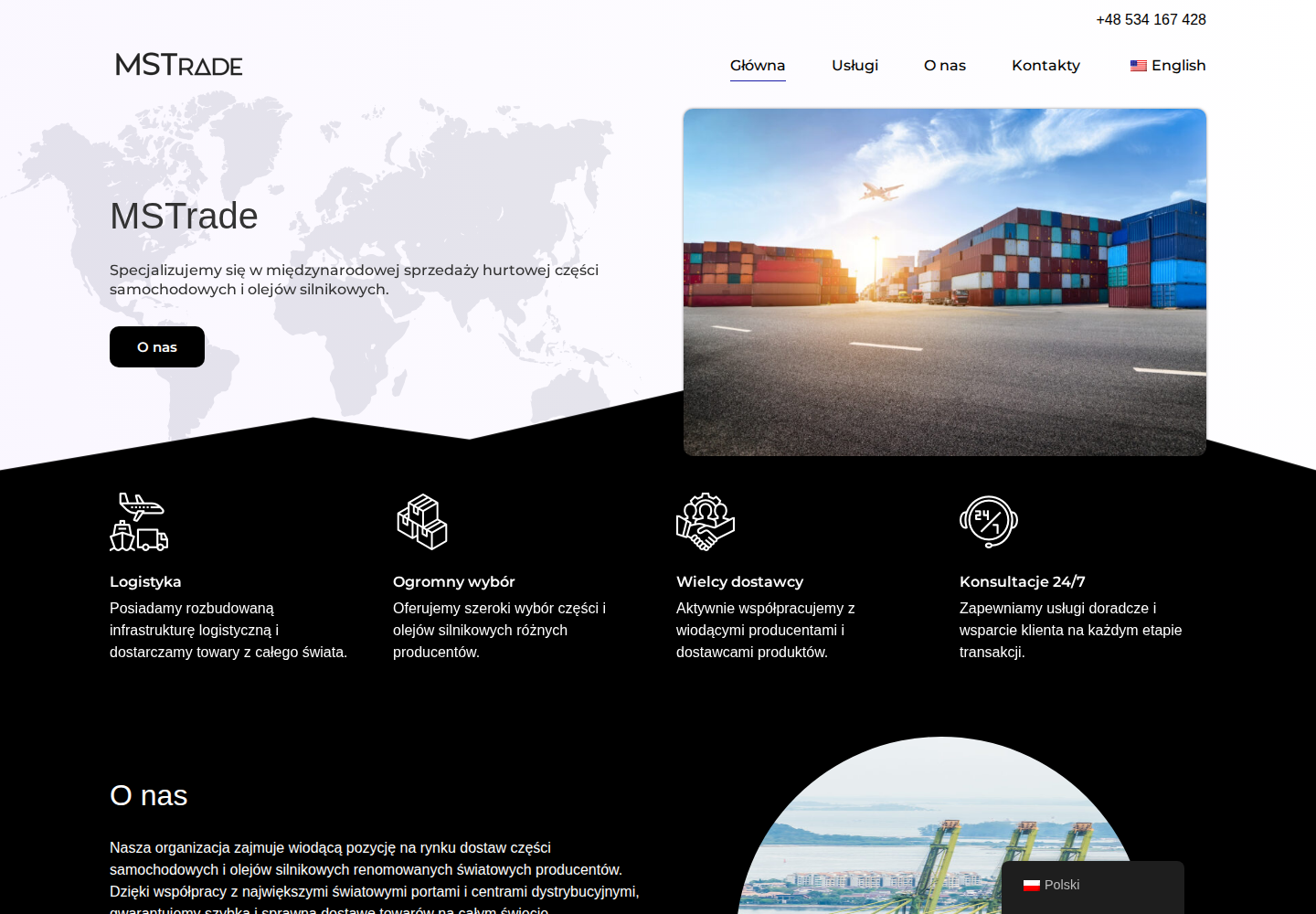
A bilingual corporate website delivered in about two days
We prepared a compact Polish and English website with the company information, services, and contact details it needed to present itself officially.
Tell us what you need to build
Describe the project, share the current website if there is one, and include examples you like. We will suggest a suitable format, platform, and preliminary price range.