CASE STUDY · NEXT.JS DEVELOPMENT

Building a cleaning company website around search demand

For a new cleaning company in Dubai, we researched search demand, grouped the queries into clusters, and used them to design the website structure. We treated every service as a separate task: reviewed competitors, identified the information each page needed, wrote the content, and prepared prototypes. We then developed and launched the website with Next.js.

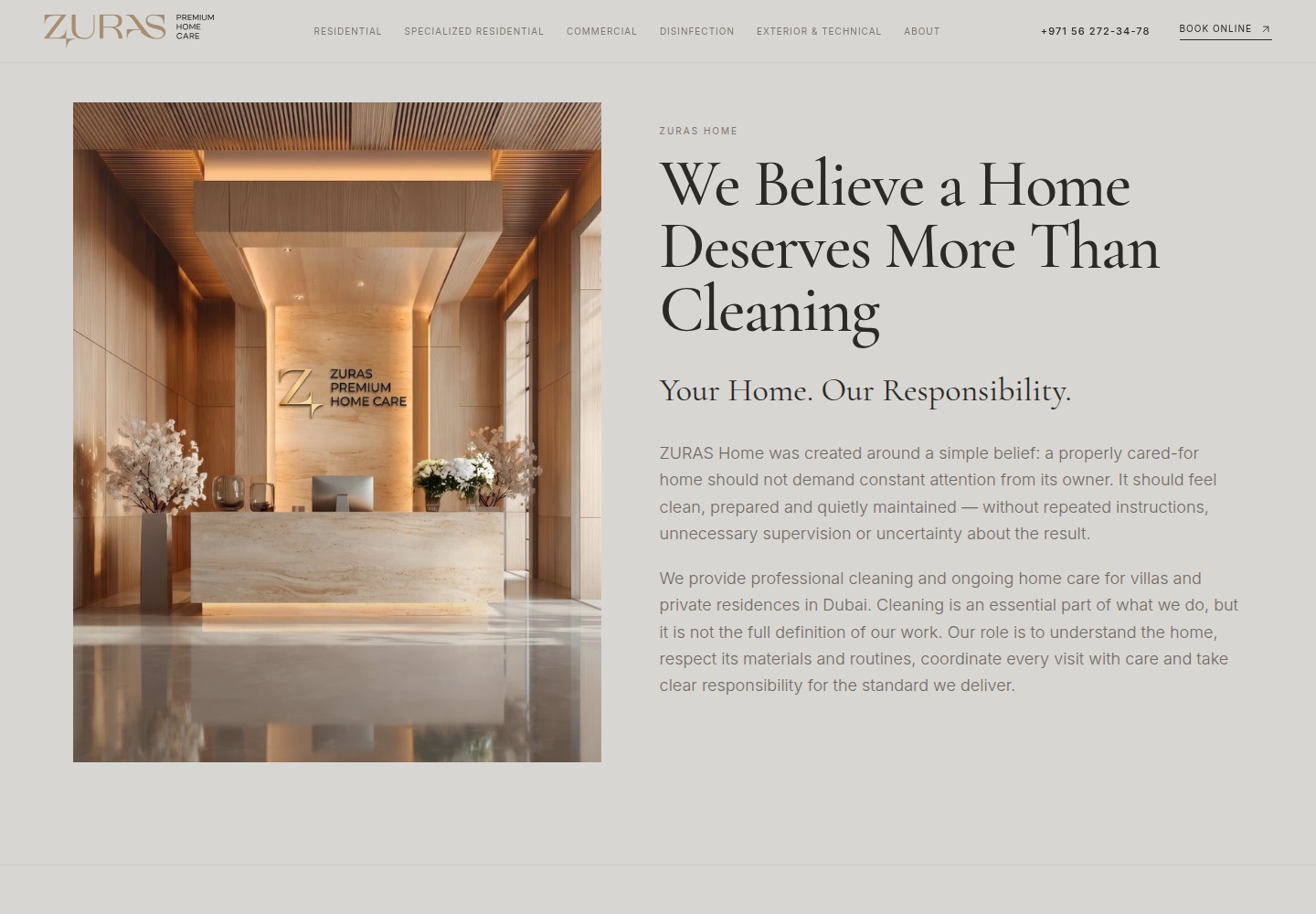
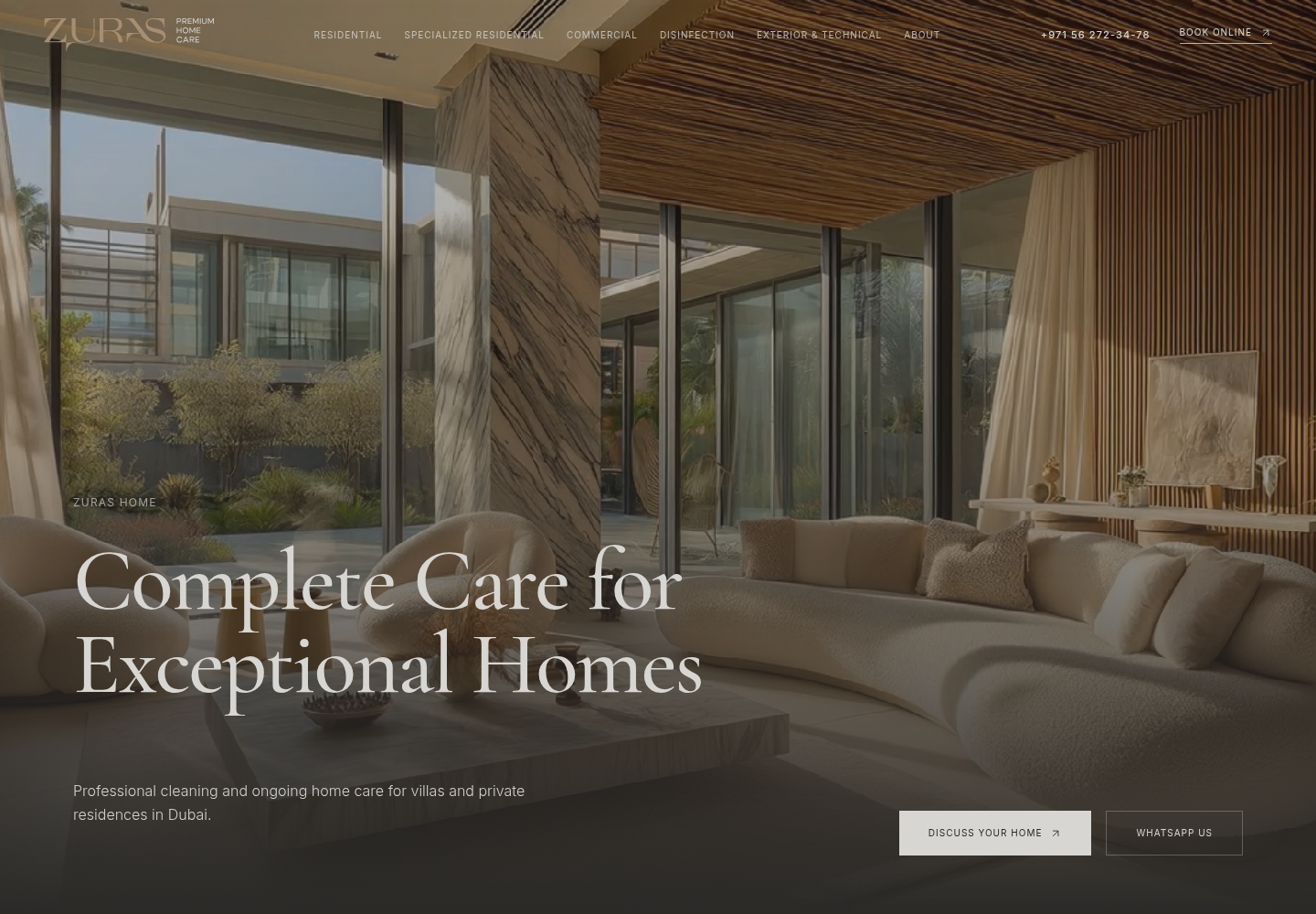
Homepage of the cleaning company website
Platform
Next.js
Market
Dubai, UAE
Project
New website built from scratch
Scope
Search research, structure, content, prototypes, and development
PROJECT SCALE

From site structure to dozens of published pages

The work began well before development. We first mapped search demand and designed the future site, then moved on to content, prototypes, design, and implementation.

50+service pages published on the website
10+articles prepared for the editorial section
70+prototypes created for the project
70+pages included in the public sitemap
THE BRIEFWhere the project began

A new company needed more than an attractive website

The company was entering Dubai's cleaning market. There was no established website structure or set of landing pages. We had to determine which services deserved their own pages, how they should be organised, and what information visitors would need on each one.

We could have designed a few screens first and tried to fit the services and copy into them afterwards. We worked in the opposite order, starting with search demand and the future site structure.

This gave us a clear view of how many pages the site needed, what job each page had to do, and which blocks were required to explain different cleaning services properly.
PROCESS

The complete path from search research to launch

  1. 1
    Researched search demand

    Studied how people search for cleaning services in Dubai and gathered queries across the main service areas.

  2. 2
    Grouped queries into clusters

    Combined queries with the same intent to define the future pages without creating several pages about the same service.

  3. 3
    Designed the site structure

    Turned the clusters into sections, service pages, and supporting informational content.

  4. 4
    Reviewed competitor websites

    Identified recurring blocks and the information visitors expect to find on cleaning company websites.

  5. 5
    Built a reusable block system

    Designed blocks that could support different pages without forcing the entire site into a single template.

  6. 6
    Planned every page separately

    For each cluster, we reviewed the search results again, compared competitor content, and created our own page structure.

  7. 7
    Wrote the content and prepared prototypes

    Created the copy, arranged it in the right order, and turned it into page prototypes.

  8. 8
    Moved the system into design and development

    The prototypes informed the visual design of the reusable blocks. We then built the site with Next.js and connected a content management system.

ARCHITECTURE

We found out what people search for before creating the pages

The keyword research was not used merely to add phrases to the copy. It became the foundation of the entire site architecture.

We separated demand by service and user intent. When a query needed its own landing page, we gave it a dedicated place in the structure. When several phrases described the same need, we covered them on one page.

The result is a site where cleaning services have a clear place from the outset, so new pages do not have to be added at random whenever a new need appears.

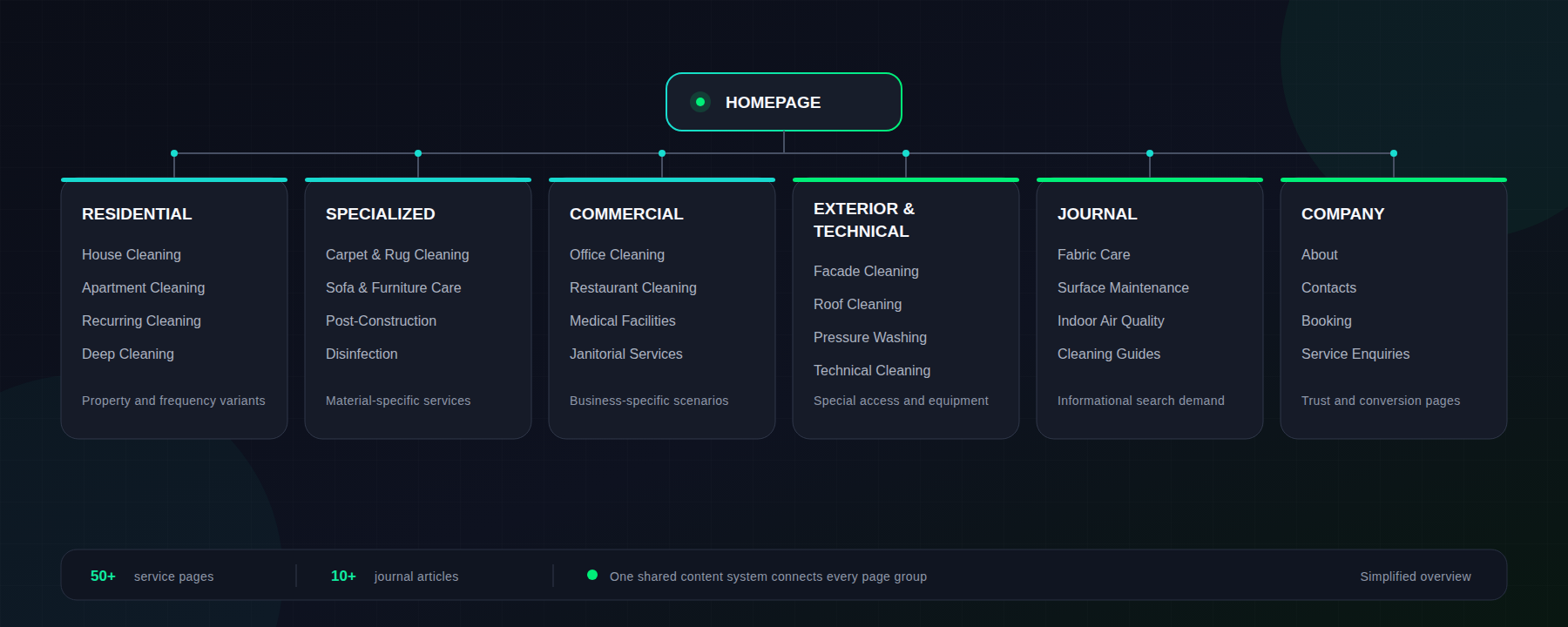
Simplified architecture of the cleaning company website
Main sections and examples of nested pages. This simplified diagram does not show every published URL.
WHY IT MATTERS

A structure that leaves room to grow

Cleaning services already have a clear place in the architecture, so new pages can be added without disrupting the system.

  1. 01

    Visitors can find the right service more easily

  2. 02

    Search engines receive a clear site structure

  3. 03

    Closely related pages do not compete with one another

  4. 04

    The content can be expanded consistently

  5. 05

    New services fit into an existing system

CONTENT

One template could not explain every service equally well

Different cleaning services come with different customer needs, processes, limitations, and questions. We therefore did not duplicate one structure across dozens of pages and simply replace the service name.

For every cluster, we reviewed the search results and competitor pages separately. We examined the questions they answered, how they explained the service, what they included in the process, and which information helped visitors make a decision.

We combined overlapping ideas, added what was missing, and removed what was secondary. We then created an original page structure and wrote the content for that specific service.

As a result, the pages differ in more than their headings. Each one explains its own service and answers the questions connected with it.

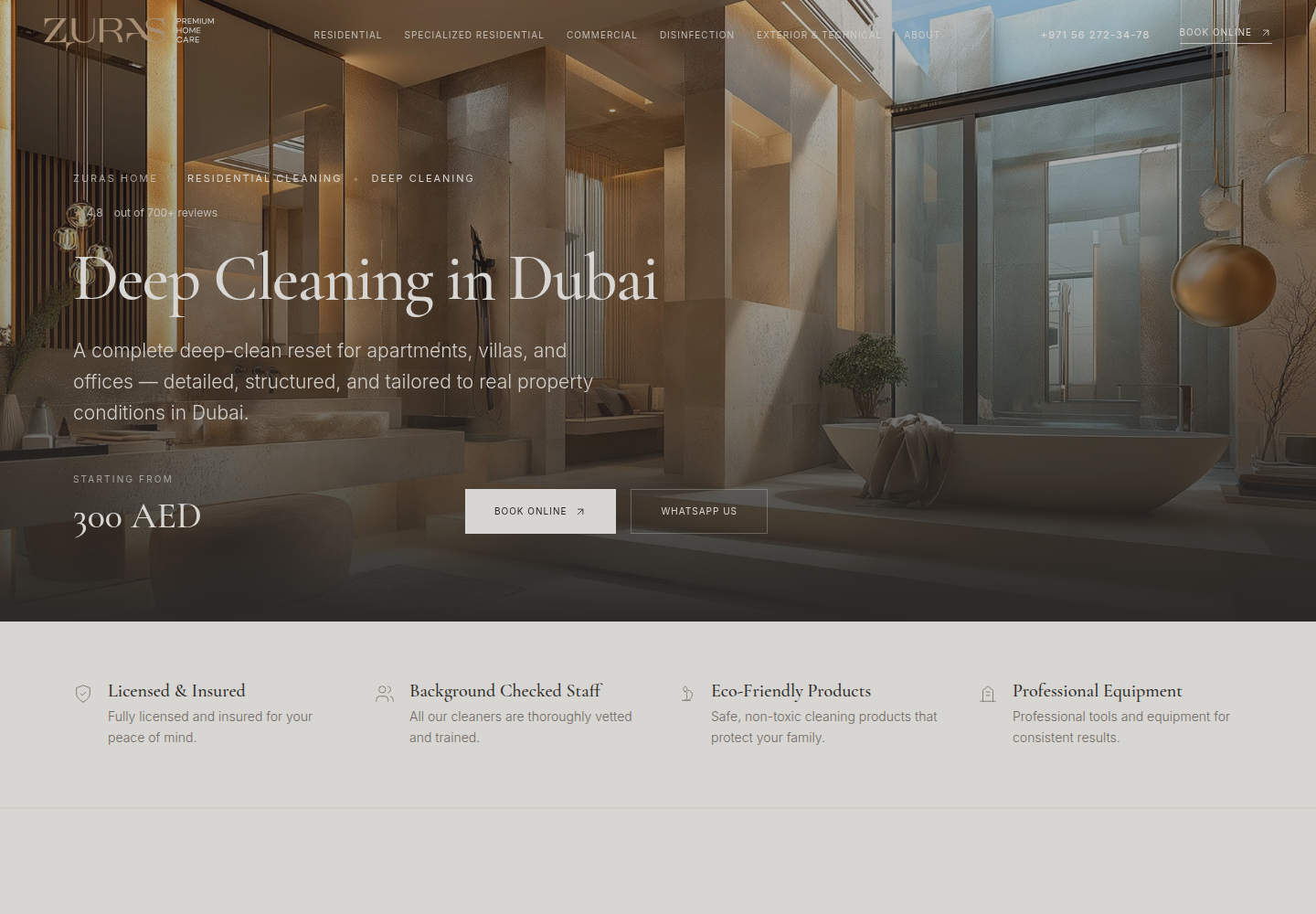
Deep cleaning service page
Each service has its own structure and content.
PROTOTYPING

Dozens of pages built from one considered system of blocks

A large website should not feel like a collection of unrelated landing pages that happen to share a domain. We began by identifying recurring types of information: service descriptions, benefits, the working process, cleaning checklists, common questions, service areas, and other elements.

We created reusable blocks for these needs. That did not mean every page used the same layout. Blocks could be rearranged, expanded, and used only where they genuinely belonged.

More than 70 prototypes were created for the project. They defined not only what each page would contain, but also the order of information: what visitors would see first, which questions would be answered next, and where the following action would appear.

The designer therefore worked from an established content system rather than an abstract description of the website.

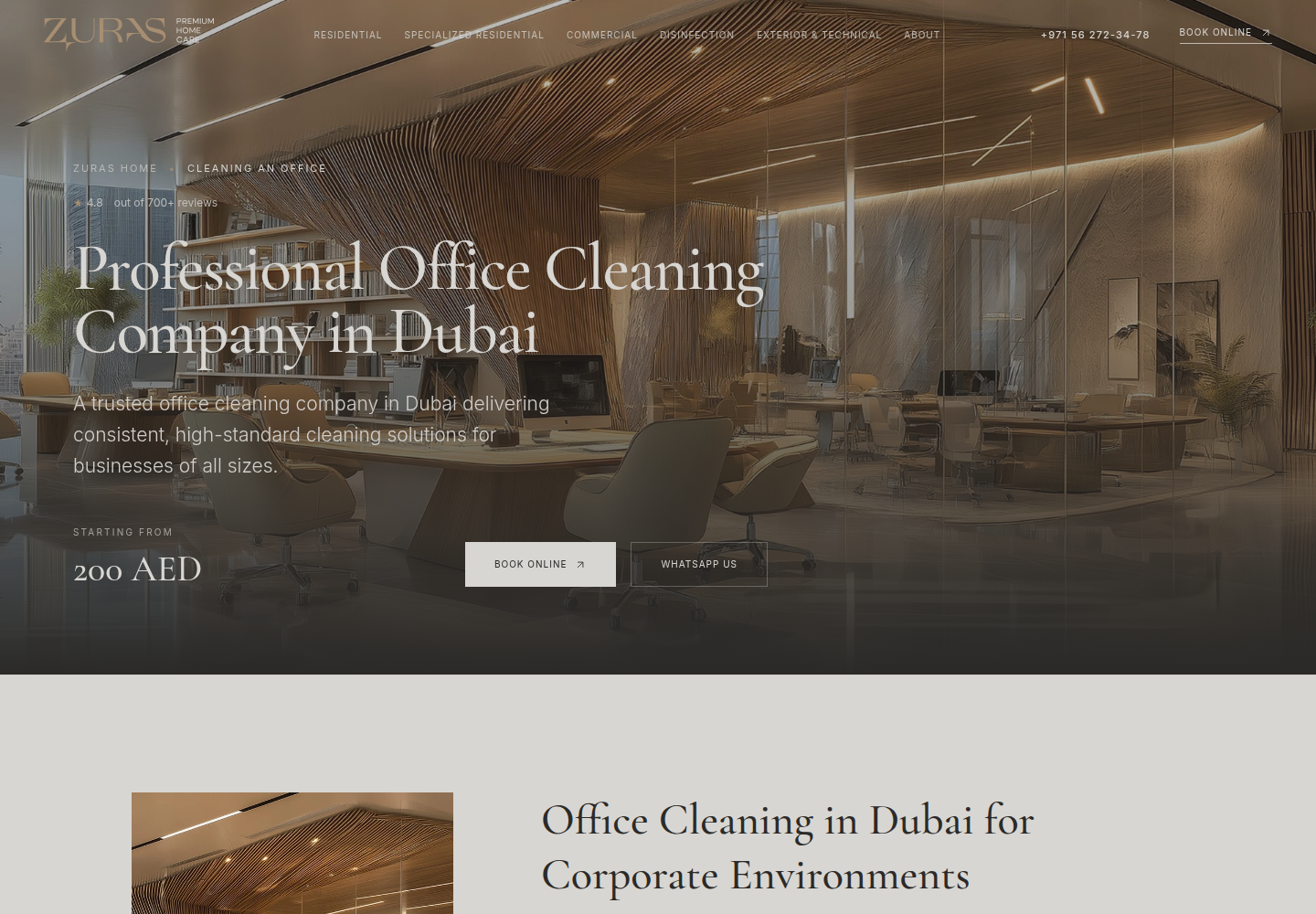
Office cleaning service page
Pages share one block system without repeating one another in full.
DESIGN AND DEVELOPMENT

The visual system was designed around real content

Design began only after the structure, content, and required blocks were clear. This allowed the visual system to account for real copy length, different page types, and recurring elements from the start.

Once the visual system was ready, we moved into Next.js development. Repeated elements became components that could be combined into pages with different content and layouts.

We also connected a separate content management system. The client's team can edit copy and continue expanding the site without changing code for every page update.

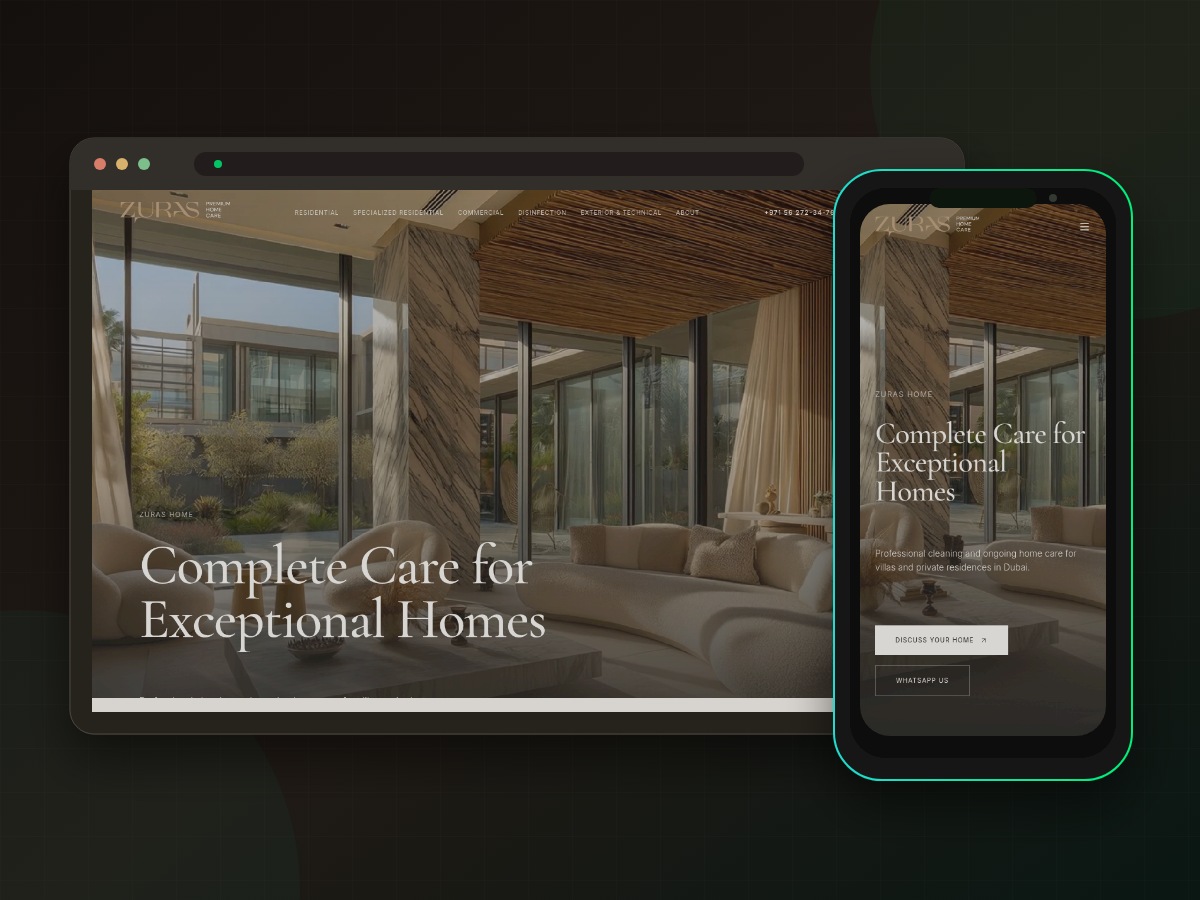
Desktop and mobile versions of the cleaning company website
One visual system adapted for desktop and mobile devices.
THE FINISHED WEBSITE

Pages assembled from a shared system of blocks

Homepage of the cleaning company website
HomepageCompany positioning and routes into the main service areas.
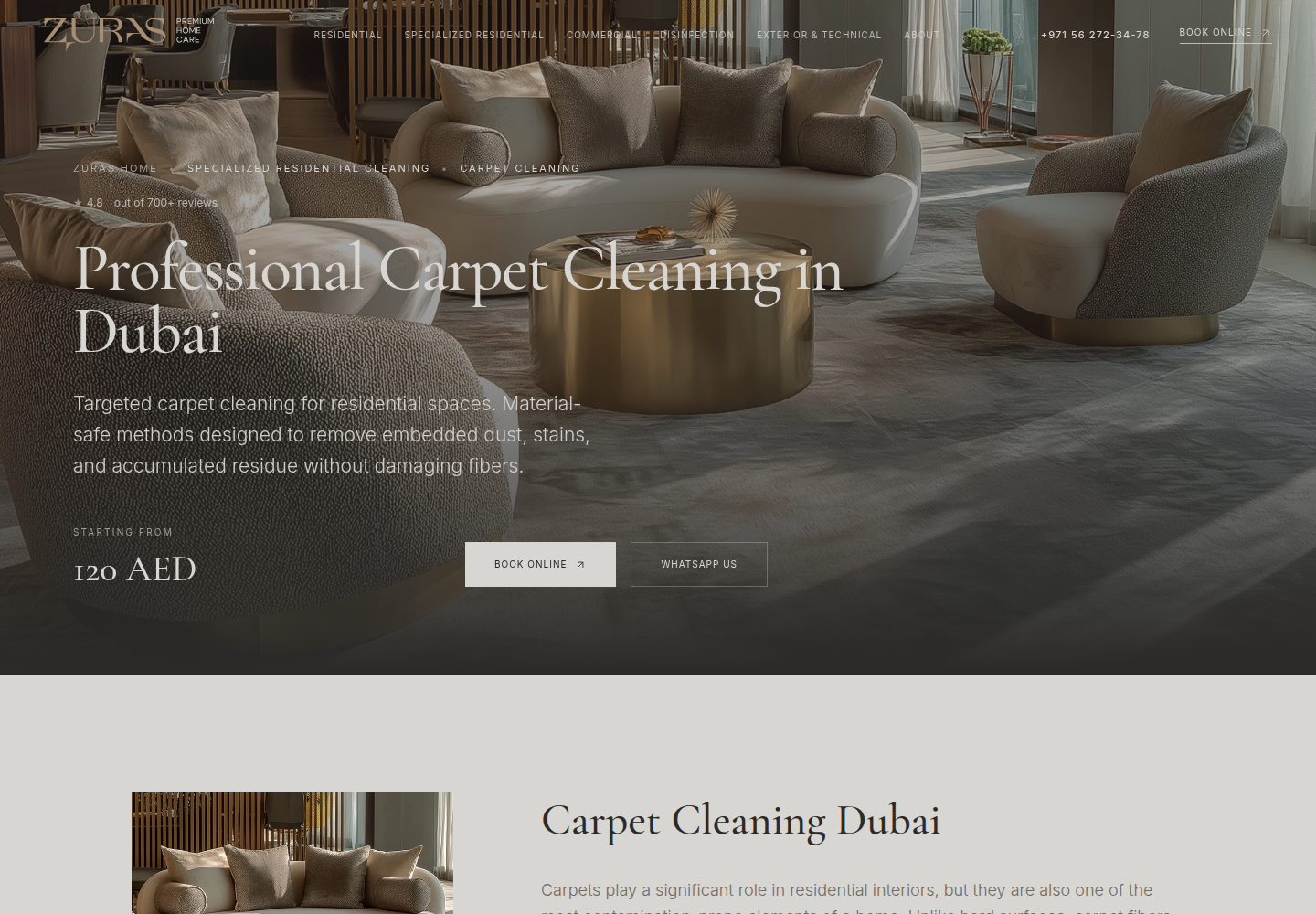
Carpet cleaning service page
Specialist serviceA dedicated landing page for one cleaning service.
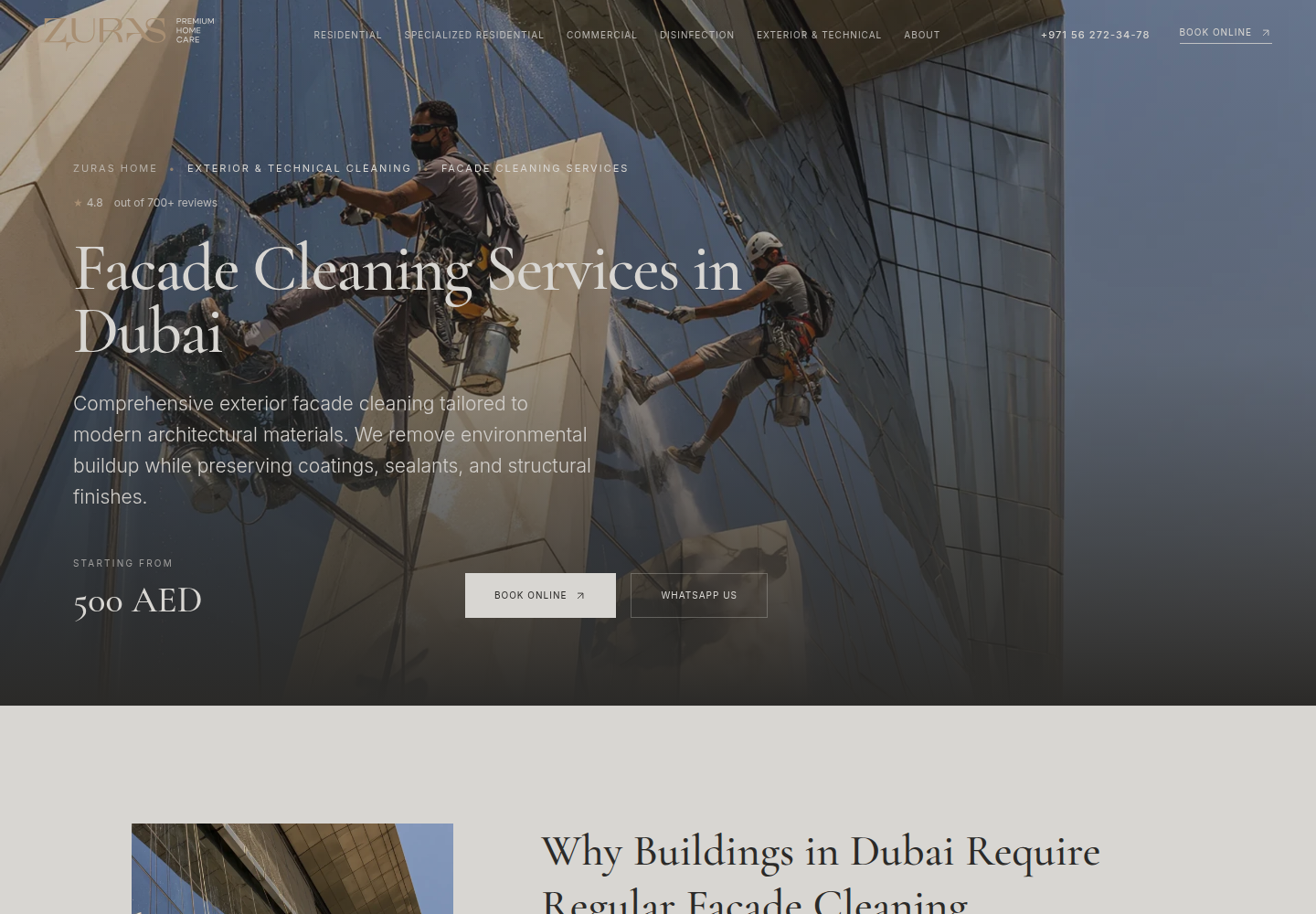
Facade cleaning service page
Another serviceA service page with its own content and combination of blocks.
About page for the cleaning company
About the companyAn informational page with its own block structure.
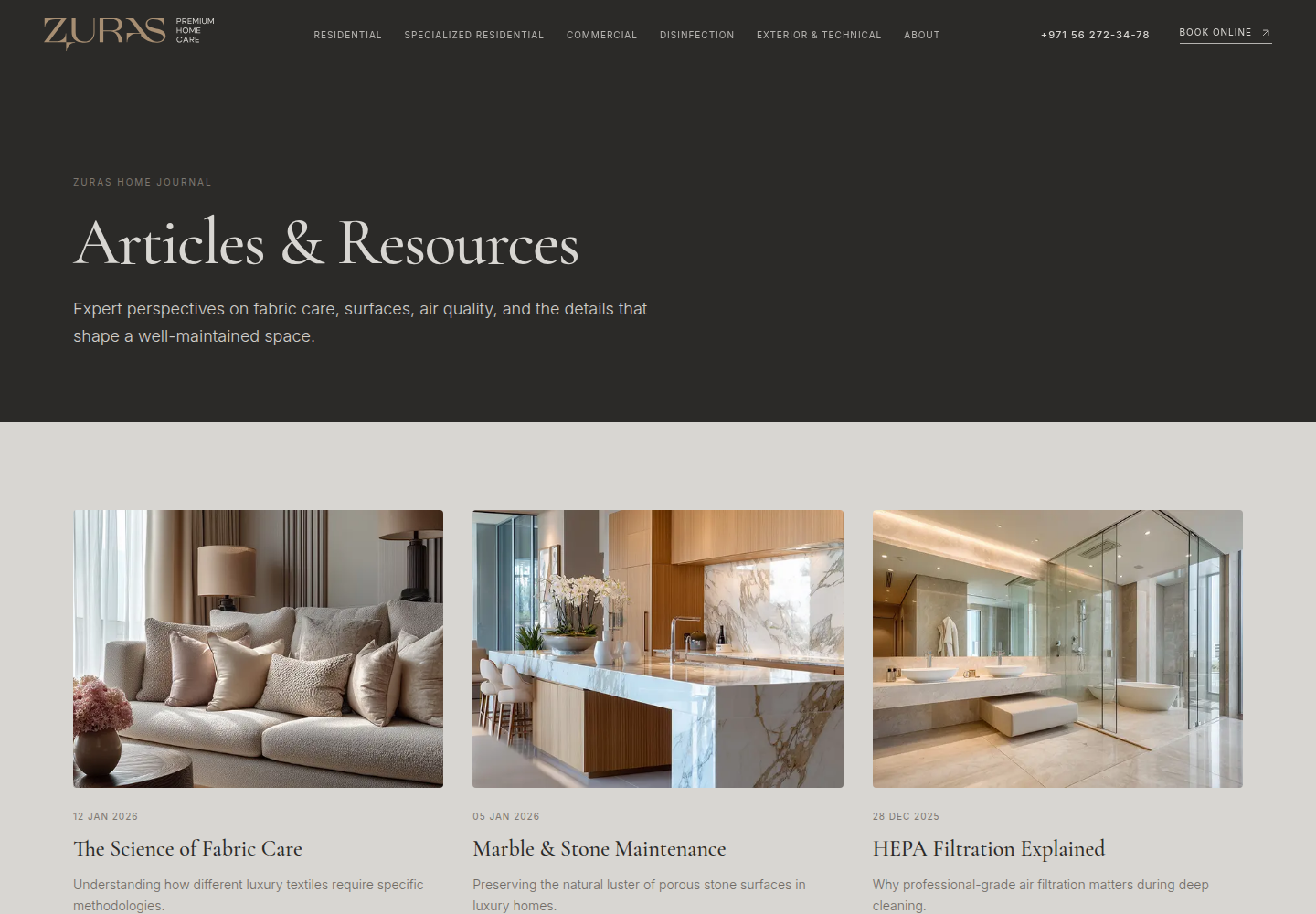
Article library on the cleaning company website
Article libraryEditorial content integrated into the wider site structure.
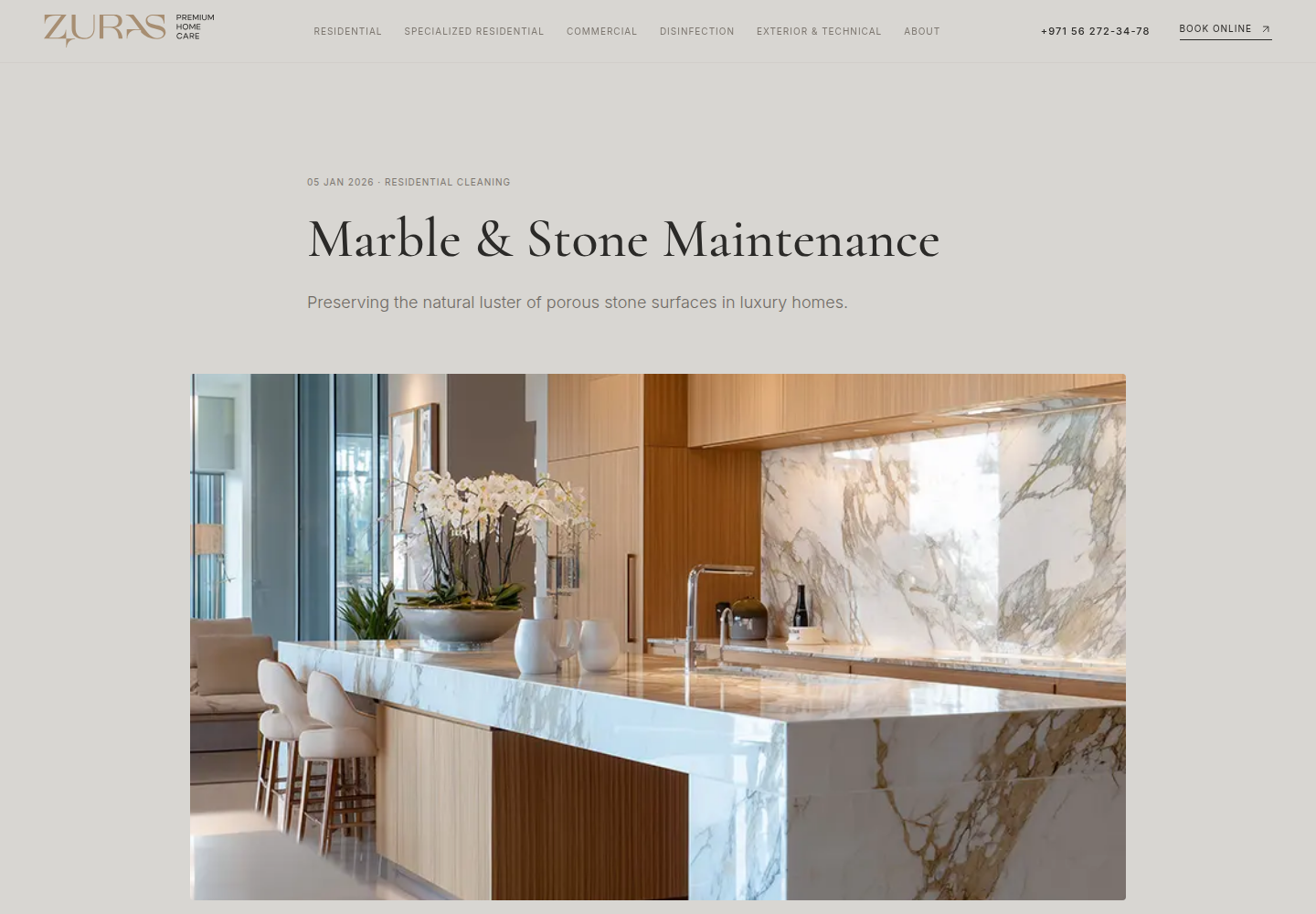
Article about caring for marble and stone
ArticleAn informational resource within the same visual system.
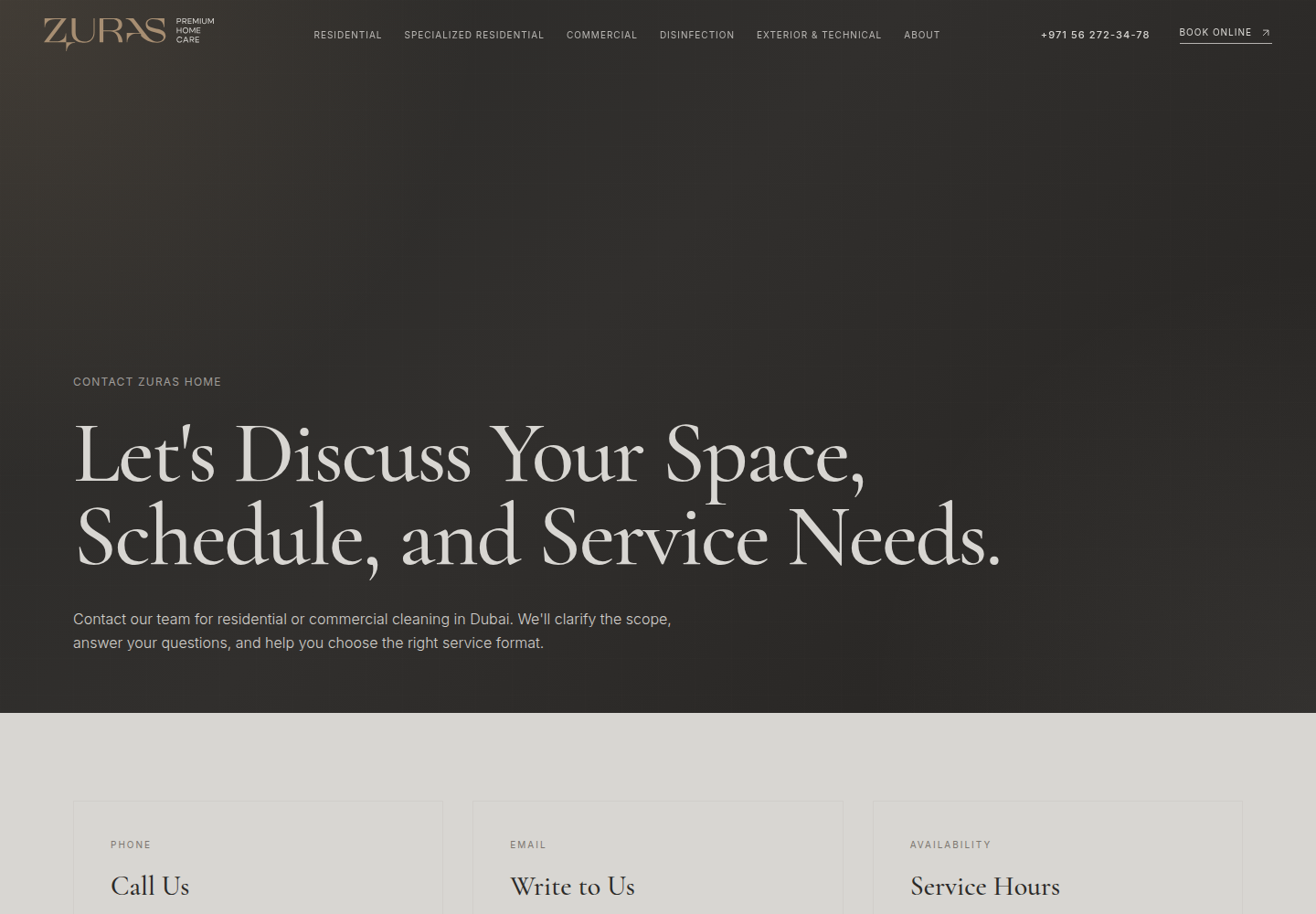
Contact page of the cleaning company website
Contact pageA dedicated page for enquiries and service options.
OUTCOME

A complete website with room for continued growth

The client received more than a developed and published website. Before launch, we had designed the search architecture, defined the page set, written the content, and created a block system for future expansion.

Content can be managed through a CMS, while new services can be added within the existing structure. We also registered a Google Business Profile in advance to establish the company's local presence in Dubai.

Ongoing SEO was not part of the completed project stage, so we do not attribute traffic or lead growth to the development work. The outcome of this stage is a complete website that can be expanded and promoted over time.

Published service pages
50+
Informational resources
10+
DISCUSS A PROJECT

Need a website that can keep growing after launch?

Tell us about the company, its services, and what the new website needs to achieve. We will review the project and suggest the right starting point: structure, prototypes, development, or the complete process.