Search is no longer limited to a list of links. Google generates AI Overviews and answers in AI Mode, ChatGPT searches the web, and Microsoft Copilot uses information available through Bing. A user can receive an explanation, comparison, or shortlist without opening every source individually.
This shift has produced several new labels: AEO, GEO, LLM SEO, and AI Search Optimization. Each describes part of the work, but none replaces SEO. A page still needs to be discovered, processed, and understood before it can support an AI-generated answer. Being indexed alone is not enough. The system also needs to identify a relevant passage, connect it to the question, and decide whether the source is suitable for the response.
SEO for AI search starts with a sound website. Clearer explanations, verifiable claims, a consistent presence beyond the site, and dedicated measurement of AI citations come afterward.
SEO, AEO, GEO, and LLM SEO
These terms overlap, which is why people often use them interchangeably.
| Approach | Primary task | Where it appears |
|---|---|---|
| SEO | Make pages accessible, understandable, and relevant to a query | Conventional search results and their newer formats |
| AEO | Help a system extract a precise answer to a question | Direct answers, snippets, and conversational search |
| GEO | Improve the chance of material being selected as a source | Generative answers, mentions, and citations |
| LLM SEO | Combine visibility work across systems built on language models | Search and conversational AI interfaces |
SEO covers visibility in search engines. It includes technical health, indexation, site structure, page content, internal links, and external signals.
AEO stands for Answer Engine Optimization. It focuses on making a clear answer available for a search or conversational system to extract. The idea predates ChatGPT: featured snippets, short answers, and People Also Ask results addressed a similar need.
GEO, or Generative Engine Optimization, concerns generative answers. The goal is for a site's material to be selected as a source, mentioned, or cited in the generated response.
LLM SEO is a broad label for work related to visibility in systems built on large language models. It is also the least settled of the four terms.
In practice, rigid boundaries are not very useful. One strong page may rank in conventional results, supply a short answer, support an AI Overview, and be cited in ChatGPT. Much of the work behind those outcomes is the same.
How AI search finds information
Each system has its own retrieval process, but the broad sequence is familiar:
- The system discovers a page.
- It gains access to the content.
- It processes the text and other available data.
- It matches the material to the user's question.
- It selects useful passages and sources.
- It generates a response and, where the interface supports it, displays links.
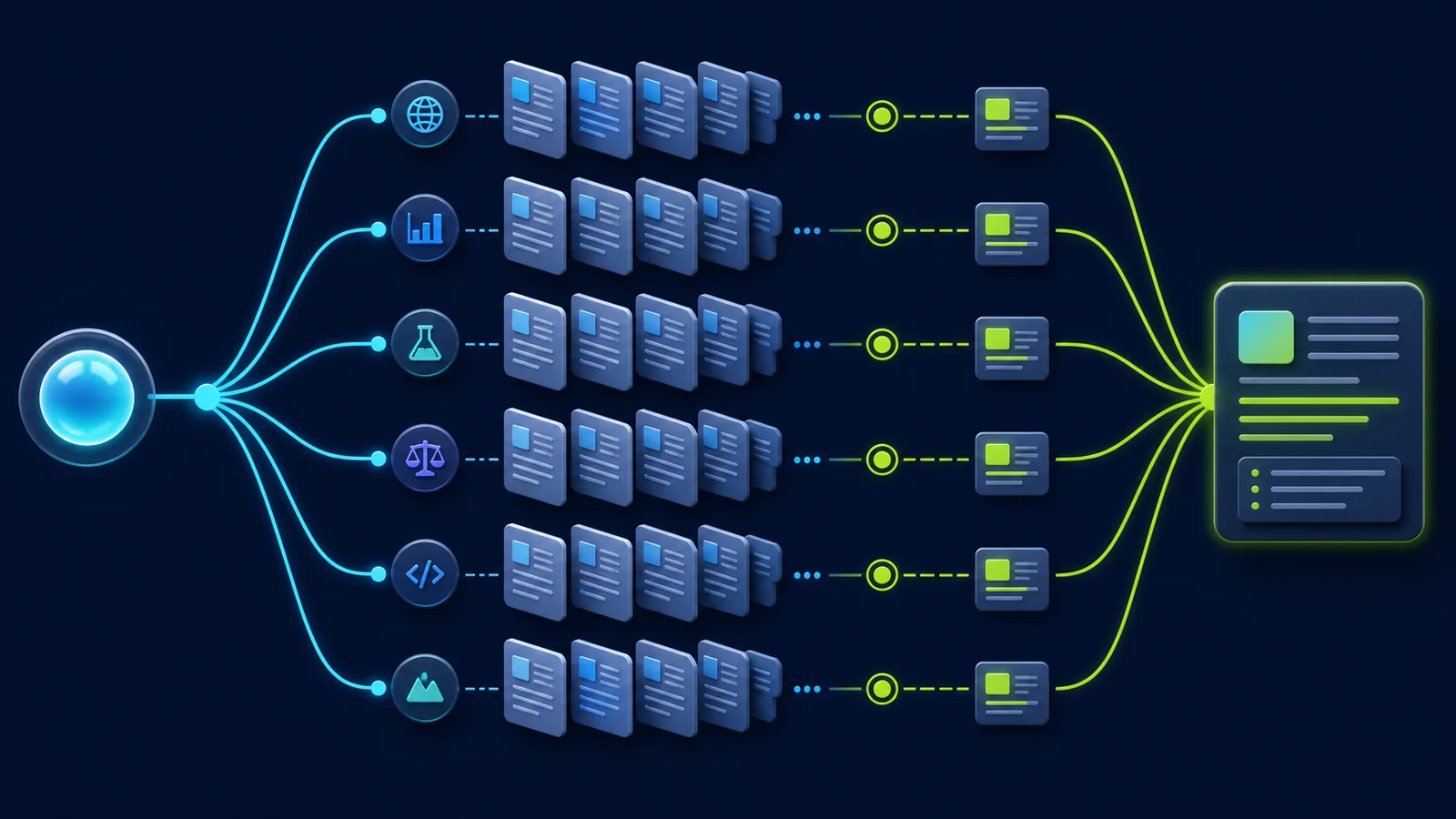
Pages used by Google AI Overviews and AI Mode must meet the ordinary technical requirements for Google Search. Google says there are no additional technical requirements or special optimizations for these formats. A page must be indexed and eligible to appear in Search with a snippet. Google's also describes query fan-out, where the system runs several related searches across subtopics before assembling an answer.
This changes how we should think about a query. A person may ask one complex question, while the system breaks it into several narrower searches. A source may therefore be selected because it answers one supporting question especially well, even if it was not built around the user's exact wording.
ChatGPT uses a search crawler called OAI-SearchBot. OpenAI recommends allowing it when a publisher wants site content to be discoverable and cited in search answers. OAI-SearchBot and GPTBot have different purposes: one supports search, while the other is associated with potential model training. Publishers can manage them independently, as explained in .
What has not changed
Pages still need to be crawlable
If robots.txt, a CDN rule, the server, or a JavaScript-only delivery path blocks a crawler, the main content may remain unavailable. AI does not repair technical problems or infer information it never received.
Response codes, canonical URLs, indexing directives, mobile rendering, and the presence of important text in HTML still need to be checked. These requirements matter for conventional and generative search alike.
Every page needs a clear purpose
A page that touches ten topics superficially is usually less useful than one with a defined task. Its title, main heading, copy, and related resources should make that task clear.
This does not mean creating a URL for every wording of the same question. Closely related needs can share a page when a visitor reasonably expects to find them together. Distinct search intents usually deserve separate pages.
Site structure still matters
Internal links help systems discover pages and understand how they relate. A service page can connect to a relevant case study, article, definition, or adjacent service. The result is a coherent body of material rather than a collection of isolated documents.
A proper heading hierarchy remains useful as well. It organizes the page for visitors, crawlers, screen readers, and simplified reading modes. Headings should describe the document structure instead of acting as font-size controls.
Word count is not a substitute for usefulness
A long article is not automatically a good one. Length is warranted only when the subject cannot be answered properly without it.
Weak material can be stretched across thousands of words by repeating the same point. Clear explanations, examples, limitations, tables, and relevant evidence are more useful than a target word count.

What AI search has changed
Questions are becoming longer and more specific
In conventional search, a person may enter a short phrase, open several pages, and refine the query. A conversational interface lets them describe the situation, constraints, and desired result at once.
Repeating one primary keyword is therefore not enough. A page should address the related questions a buyer is likely to ask: who the solution suits, how it works, what the options are, what affects cost, which limitations apply, and what happens next.
This is not an instruction to turn every page into an encyclopedia. The page needs enough depth for its specific task.
Answers need to be easy to extract
Useful information should not sit behind a long generic introduction. When a section answers a question, give the answer early and explain the detail afterward.
Tables work for comparisons. Steps work for processes. A short list can make requirements easier to scan. Connected prose is still better when the subject cannot be reduced honestly to a few bullets.
Turning every section into an FAQ is not the answer. The format should follow the information, not an assumption about what an algorithm prefers.
Facts need to be clear and consistent
A company name, service list, address, operating region, and authorship details should not change from page to page without a reason.
If the website says one thing, a business profile says another, and external directories contain old information, a system has to decide which version to trust. This is especially noticeable for local businesses, ecommerce sites, and large websites with many similar pages.
First-hand material is more useful than another summary
A generative system can already combine generic explanations from several sources. One more summary of familiar advice rarely adds much.
Original examples, photographs, measurements, case studies, comparisons, practical conclusions, and precise service conditions are harder to replace with a generic synthesis. They also give both people and systems a reason to use the page as a source.
Search is not limited to text
Google's guidance also covers images, video, product data, and Business Profile information. Search is increasingly multimodal: a user can ask a question with an image or look for an object through a photograph.
An image should add information rather than fill space. It needs suitable alternative text and enough surrounding context to explain why it is present. For a product, completed project, or measured result, a real image is usually more useful than unrelated stock photography.
Visibility beyond your own website
AI search can assemble an answer from several sources. A company's public identity is therefore shaped by more than its own pages.
Useful external sources may include:
- complete profiles on relevant platforms;
- industry directories;
- articles and interviews;
- genuine reviews;
- client and partner case studies;
- consistent use of the company name, website, and contact information.
Small free listings can be worthwhile when they require little effort and carry no obvious reputation risk. Not every listing will produce a measurable result, but another accurate mention may help systems connect information across sources.
Paid placements deserve stricter selection. The publication's audience, topical connection, editorial quality, and practical value should justify the cost. Buying random mentions only to increase a report's link count is a poor use of budget.
External coverage does not guarantee inclusion in a generative answer. It simply expands the set of sources from which a system can learn about the company or subject.
Low-cost experiments without inflated expectations
AI search does not have one universal optimization standard. Some measures are not confirmed visibility factors, yet cost little and do not interfere with the core work. They can be tested after the more important issues are under control.
llms.txt
llms.txt is a proposed file format containing a concise site description and links to important resources. The proposal is maintained at . Adoption is growing, but the file is not a universal search-engine requirement.
Google explicitly says additional AI text files are not required for AI Overviews or AI Mode. That does not prove that llms.txt is useless to every tool or agent. It may make a site's structure easier to consume in some workflows.
If the file can be generated automatically, stays current, and needs almost no maintenance, adding it is a reasonable experiment. Its presence alone should not be expected to improve rankings or citations.
Crawler-specific rules
Review which crawlers are allowed or blocked in robots.txt. Search access and model training are not the same decision.
For example, OAI-SearchBot supports ChatGPT search, while GPTBot is associated with potential training. A publisher can permit one scenario and restrict the other. Rules for every crawler should come from that provider's current documentation, not from a copied template.
Machine-readable data
Accurate Schema.org markup can describe an organization, article, product, service, author, or navigation structure. It must agree with the information visible on the page.
Google does not require special AI schema for its generative search features. Inventing unsupported types or marking up hidden claims is not helpful. Use established entities where they fit, and keep them accurate.
Simplified content formats
Documentation sites, reference libraries, and knowledge bases sometimes publish a Markdown version or another low-complexity representation alongside the normal page. This may help individual tools process the material.
A typical commercial website does not always need a second format. It is worth testing when the CMS can generate it from the same source without creating indexable duplicates. Maintaining a manual copy of the entire site for a speculative benefit is rarely justified.

How to prepare a website for AI search
1. Check technical access
Confirm that important pages return 200, are not blocked from indexing, and are accessible to the crawlers you intend to allow. Review canonical URLs, sitemaps, redirects, and the server-rendered version of the main content.
2. Decide which questions the site should answer
Collect more than short keywords for each service or topic. Include the questions potential customers actually ask, then map them to pages so that different URLs do not repeat or compete for the same purpose.
3. Compare coverage with strong search results
Competitor analysis is not a way to copy their wording. It shows what information users already receive for the query and which questions other pages answer more effectively.
Combine the useful meaning blocks found across several competitors. Build a page structure that covers those needs while reflecting the company's real offer and evidence.
4. Rewrite weak pages
Place the central answer near the beginning. Use the remainder of the page to explain conditions, process, examples, limitations, and related questions.
Headings should help readers navigate. Add tables, lists, and FAQs only where they improve comprehension. Verify facts and numbers or remove them.
5. Connect related material
Service pages, articles, case studies, and definitions should link to one another where the relationship is useful. This gives readers a clear next step and helps crawlers discover related resources.
Link text should describe the destination. Generic wording such as “read more” works only when the surrounding sentence supplies the missing context.
6. Clean up external profiles
Review company profiles, industry platforms, directories, and other sources you can control. The name, address, website, and service description should reflect current information.
After that, plan new articles, case studies, and mentions on publications connected to the company's field.
7. Add inexpensive experiments
Once the foundation is sound, review AI crawler access, add llms.txt if appropriate, validate structured data, and test simplified content formats.
Track these separately from the core work. That distinction makes it clear which measures are required and which are hypotheses.
8. Set up measurement
Record the current position before making changes. Without a baseline, it will be difficult to interpret the result several months later.
Monitor search visibility, referral traffic, citations, branded queries, and meaningful actions on the site. No single metric describes the whole outcome.
Measuring visibility in AI search
Measurement is less standardized than it is for conventional SEO. There is no single report that contains every mention across every model.
Google has started testing dedicated generative-search reporting in Search Console. Availability may vary, so the general Search performance data remains relevant as well.
Bing Webmaster Tools has introduced an AI Performance report showing citations, source pages, and grounding queries across supported Microsoft products. Microsoft also warns that citation counts do not represent a rank, page importance, or placement within a particular answer. The details are available in the .
OpenAI adds utm_source=chatgpt.com to referral URLs from ChatGPT search. Analytics tools can isolate those visits. A missing click does not prove that the site was absent from the answer, since a user may read the response without opening a source.
A fixed set of questions can also be checked periodically across several systems. This reveals which sources are used and how a company is described. These results are not stable rankings: answers can change with wording, context, location, and the current version of the system.
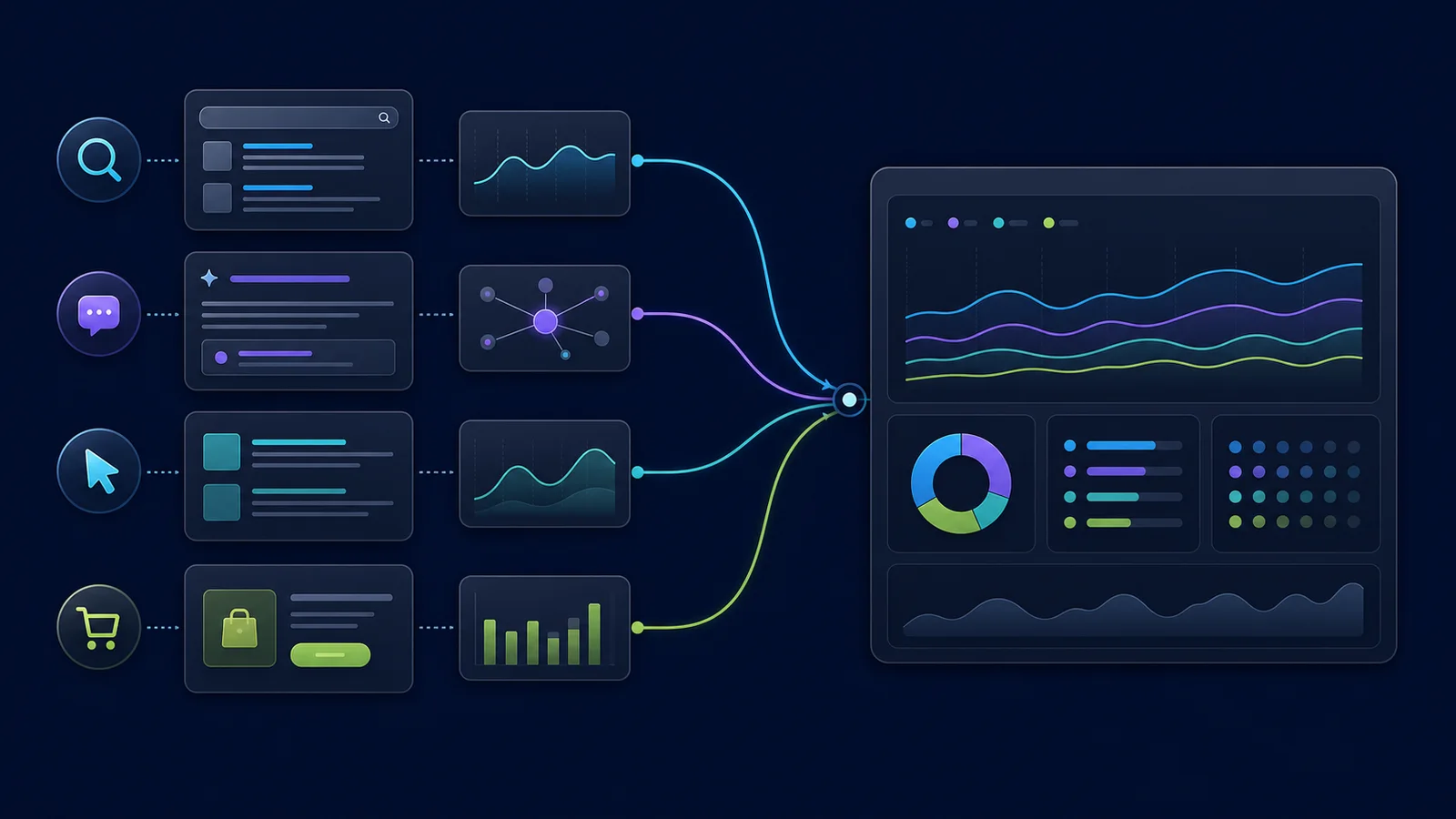
A practical measurement set includes:
- referrals from ChatGPT, Copilot, and other identifiable sources;
- the number of pages receiving that traffic;
- citations and mentions in available reports;
- visibility across a consistent sample of questions;
- branded searches;
- enquiries and other meaningful actions after a visit.
What to do next
AI search has not erased SEO. It has expanded the number of interfaces through which people receive information found on the web.
Technical access, site structure, intent match, useful content, and external signals remain the foundation. The added task is to make information clear, specific, and well supported enough for a system to reuse it responsibly in an answer.
AEO and GEO are useful names for parts of this work. Treating them as entirely separate strategies is less useful. A website should serve conventional search, generative answers, and the people who visit for the detail.
Experiments belong in the plan too. They should remain clearly separated from the foundation, and no one should promise an outcome that cannot yet be forecast honestly.
Frequently asked questions
Will GEO replace SEO?
No. Generative systems still need to discover, process, and select a source. Technical SEO, site structure, useful content, and external signals continue to affect whether material can be found and understood.
GEO adds attention to citation, answer clarity, and how a company is represented across multiple sources.
Do I need separate pages for ChatGPT?
Not by default. A separate page is justified when it serves a distinct search intent or user task.
Creating a second version of an existing page solely for ChatGPT usually adds duplication. Improve the primary page and make it available to the appropriate crawlers instead.
Does llms.txt guarantee inclusion in AI answers?
No. llms.txt is an evolving proposal, not a confirmed ranking or citation factor.
It can be a low-cost experiment when generated automatically. Crawlability, page content, and credible external sources still deserve the main investment.
Is there special Schema.org markup for AI search?
There is no universal AI-answer schema. Google does not require separate AI markup for AI Overviews or AI Mode.
Use existing Schema.org types when they accurately describe the visible page, and keep the markup consistent with the content.
Should I allow GPTBot?
That depends on the publisher's position on potential model training. OAI-SearchBot is the more relevant crawler for inclusion in ChatGPT search.
OpenAI lets publishers manage these crawlers separately. Decide which uses you want to permit before editing robots.txt.
Can anyone guarantee a mention in ChatGPT or an AI Overview?
No. Meeting every technical requirement does not guarantee indexing, display, or citation.
You can improve access and source quality, but the system makes the final selection for each question.
How long does it take?
There is no universal timeline. It depends on recrawling, the condition of the website, competition, index updates, and the system itself.
Record a baseline and compare like-for-like periods. A handful of manual prompts is not a substitute for proper analytics.
How do I know whether the work is useful?
Look beyond visits. Citation data, newly surfaced source pages, branded searches, conversions, and visibility across a stable question set all provide useful context.
If AI search sends fewer visitors but those visitors enquire more often, that traffic may be more valuable than a larger volume of accidental clicks.