CASE STUDY · DEVELOPMENT AND SEO

A search-led website for an engineering company

The company designs and delivers clean rooms and supporting engineering systems. We mapped the way customers search for those services, turned that demand into a site structure, planned each service page, and developed the website in WordPress. SEO work followed the launch.

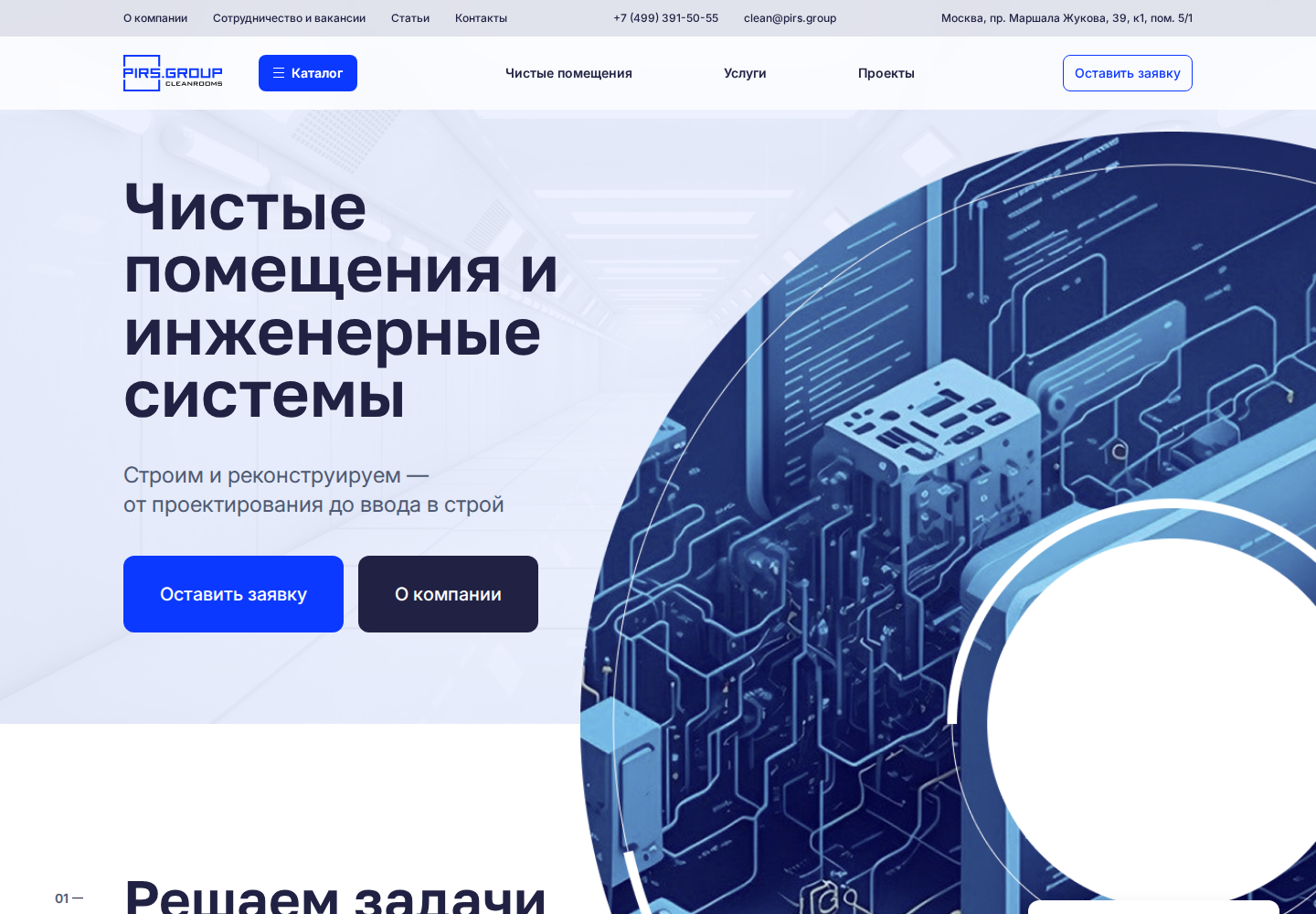
Engineering company website homepage
Market
Russia
Platform
WordPress
Project type
Multi-page corporate website
Status
Development completed, SEO added
Sector
Clean rooms and engineering systems
Our role
Search planning, structure, content, development, and SEO
THE BRIEF

Complex service lines needed a clear structure

The company delivers clean-room projects for several industries. A handful of generic service pages could not explain that scope. Buyers search by facility type, requirements, and field of application.

We therefore started with demand rather than layouts. The research established which sections and pages were needed and gave navigation, content, and later SEO work a shared foundation.
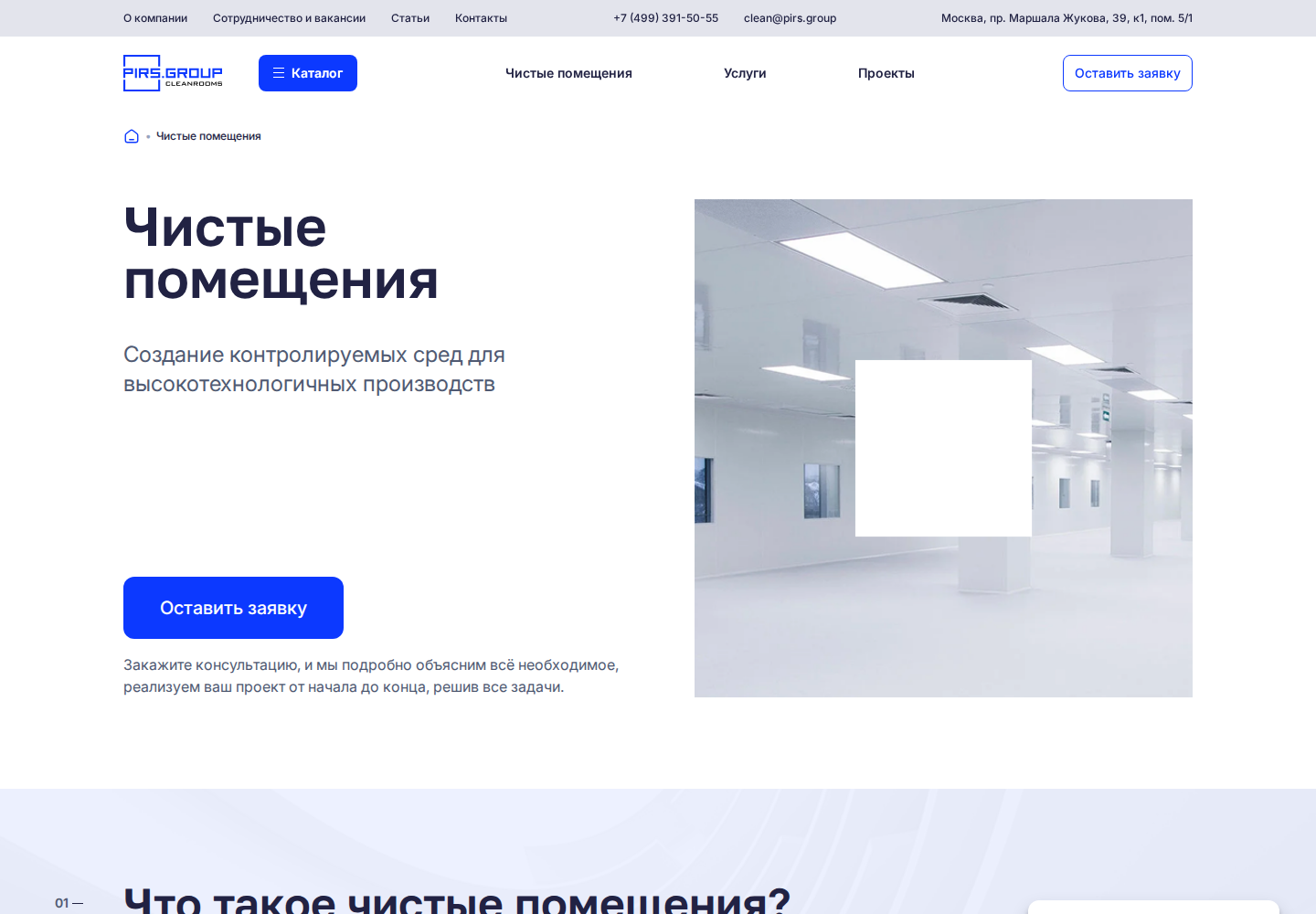
Clean-room services section
A broad service direction connects individual services and industry applications.
INFORMATION ARCHITECTURE

Search demand shaped the site hierarchy

Queries were grouped by meaning, then assigned to sections and pages with distinct purposes.

  1. 1
    Search queries

    Recorded how potential customers describe their needs.

  2. 2
    Intent groups

    Combined terms that belong to the same task.

  3. 3
    Service directions

    Defined the main sections of the website.

  4. 4
    Pages

    Separated individual needs within each direction.

  5. 5
    Navigation

    Connected the pages in a usable hierarchy.

  6. 6
    Future growth

    Left clear routes for new services and content.

END-TO-END PROCESS

Demand research carried through to launch and SEO

Early structural decisions remained useful throughout prototypes, design, development, and promotion.

Stage 01

Mapped search demand

Identified the main needs and the pages they required.

Stage 02

Planned the site structure

Assigned demand groups to sections and linked related pages.

Stage 03

Reviewed competing pages

Studied the questions and content patterns within each service direction.

Stage 04

Prepared content and prototypes

Defined a page-specific order of sections before visual design.

Stage 05

Moved into design and development

The approved prototypes guided the WordPress build.

Stage 06 · now

Added SEO

Post-launch work continued within the same structure.

SERVICE PAGES

A shared system did not produce identical pages

Pages on one website naturally share certain components, but each service has a different search intent, set of questions, and buying context.

We researched every direction separately. Reusable components kept the visual system consistent, while structure and content remained specific to the service being described.

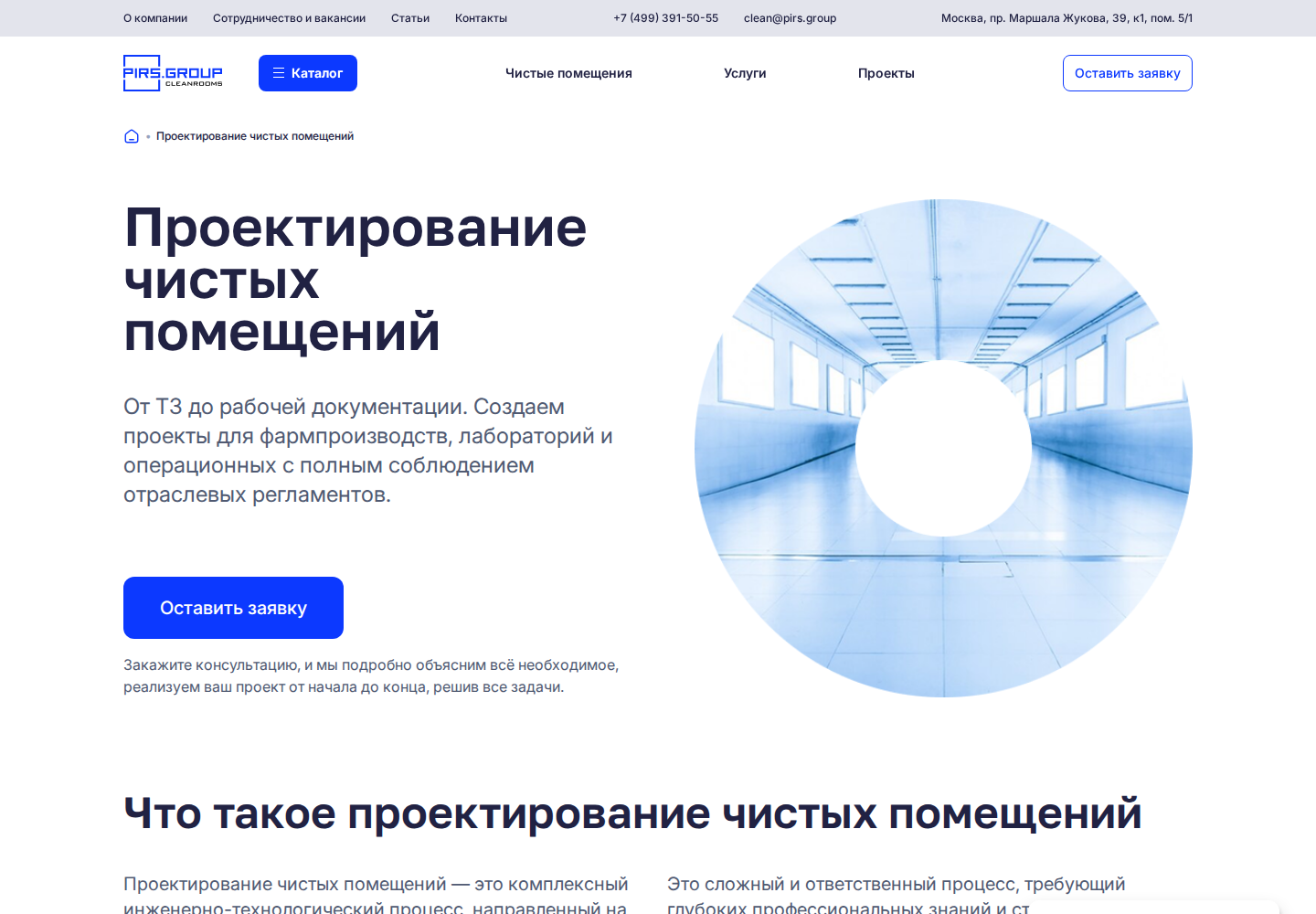
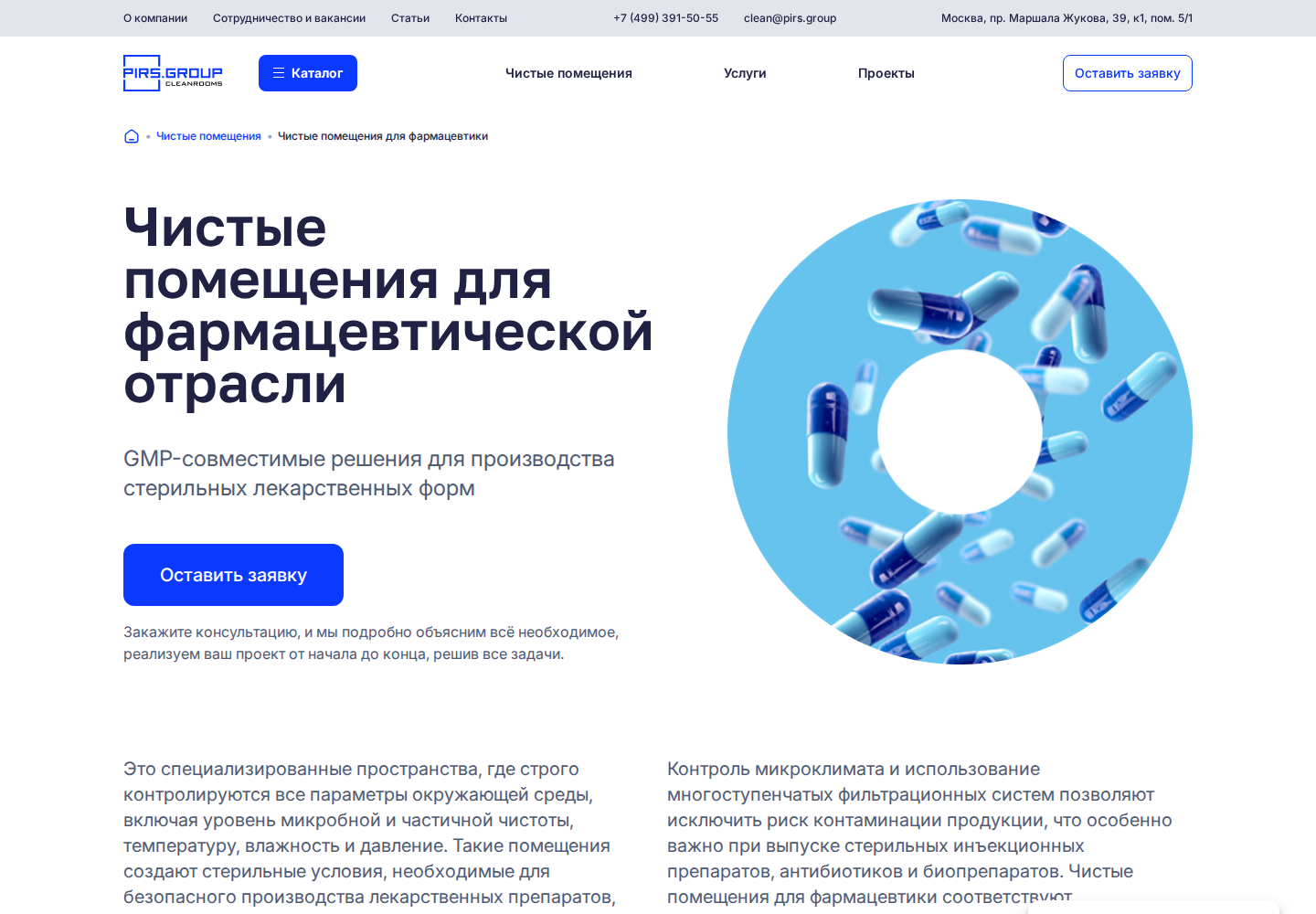
Pharmaceutical clean-room page
The industry page addresses its own operating needs and requirements.
PAGE CONTENT

Every service received its own page plan

  1. 1
    Specific demand

    Defined the queries tied to one service.

  2. 2
    Competing results

    Reviewed pages already serving that demand.

  3. 3
    Required subjects

    Collected the questions the visitor needs answered.

  4. 4
    Original structure

    Arranged the material without copying another page.

  5. 5
    Complete content

    Wrote the page for the chosen structure.

  6. 6
    Prototype

    Showed the intended page before visual design began.

PROTOTYPING

Design started with a page that had already been thought through

The prototype established section order, approximate content depth, reusable components, and page-specific material. The designer did not have to invent content around an empty screen.

Layouts were built around real copy, and development started from an agreed system. Content did not have to be squeezed into an arbitrary design after approval.

Clean-room design service page
Structure and content were defined before visual treatment began.
WORDPRESS

The website was built to accommodate further development

Once the design was approved, we developed the website in WordPress. Recurring elements became manageable components that support different page types while preserving a consistent visual language.

Editors can update copy and add material through the CMS. Expanding the website does not require redesigning every basic component from scratch.

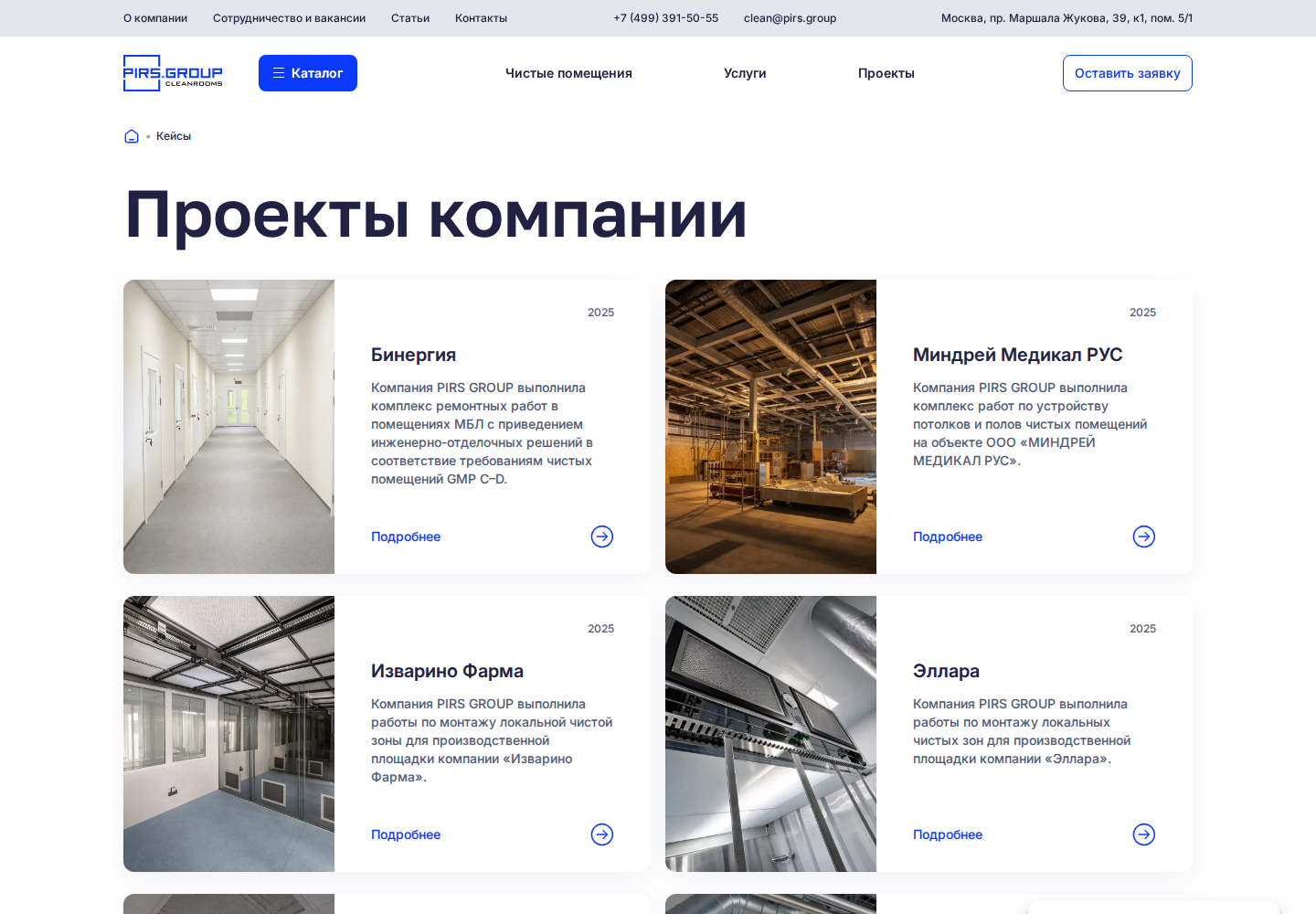
Engineering company project section
The system supports services, industries, projects, and editorial content.
AFTER LAUNCH

Development moved into SEO without changing the project logic

The information architecture prepared for development also became the foundation for SEO. Existing pages can be improved and new directions can be added without rebuilding the site around a different model.

This case does not claim unverified traffic or ranking figures. Its documented outcome is a website that moved beyond launch with a workable foundation for continued search development.

THE WEBSITE

Different directions operate within one system

Website homepage
HomepageThe company and its main service directions.
Clean-room section
Service sectionA broad direction with its own hierarchy.
Pharmaceutical clean-room page
Industry pageSolutions for a specific field of application.
Clean-room design page
Service pageA distinct engineering task and its content.
Completed projects section
ProjectsPractical work presented within the site structure.
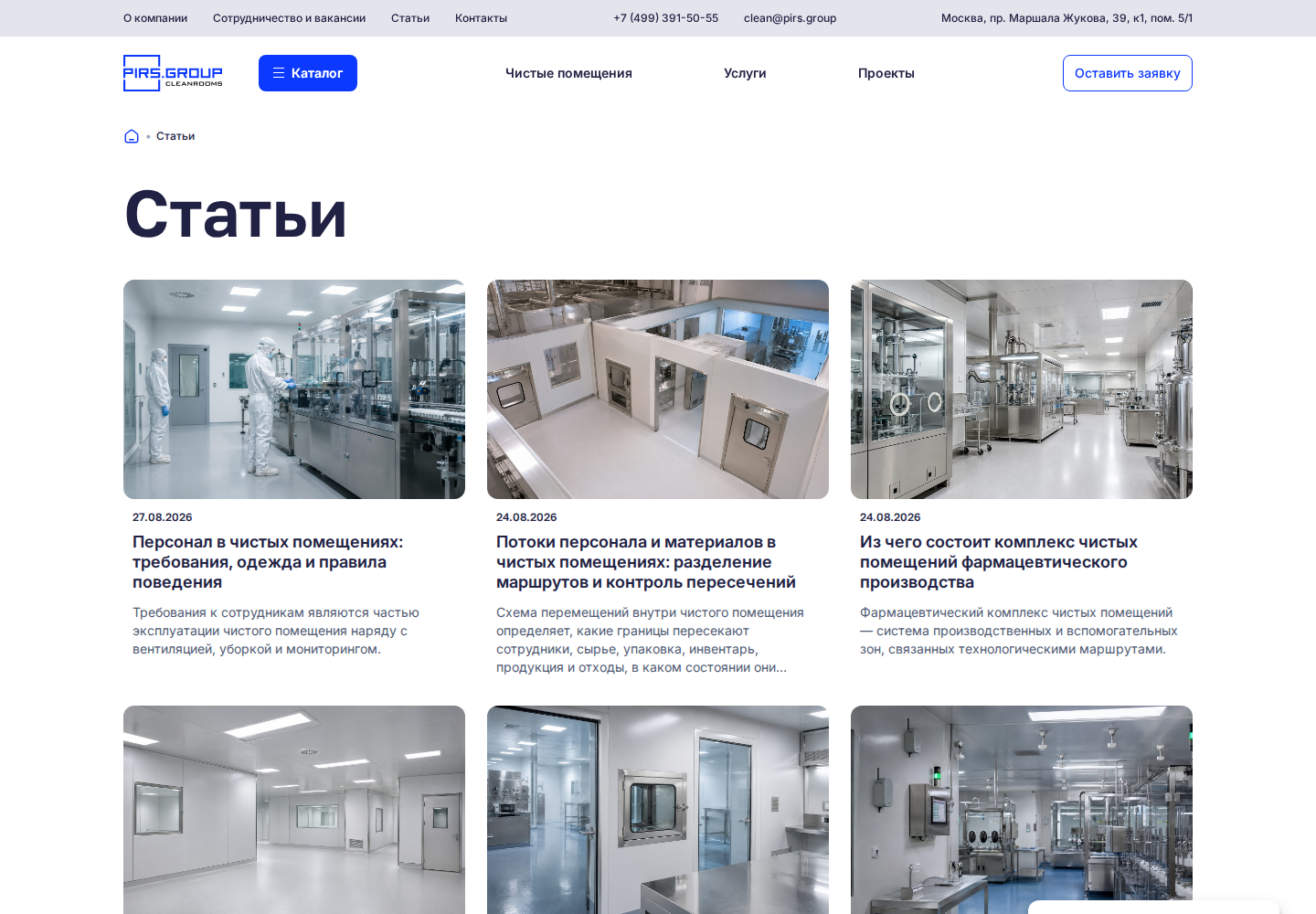
Editorial section
Editorial contentArticles addressing specific audience questions.
OUTCOME

The website has a structured foundation for further development

The client received a multi-page website whose structure was defined before design and development. Each service was planned around its own demand, content, and section order.

SEO followed the launch and continues within the same system, so later development does not require a new foundation for every page.

This case does not claim unverified traffic, ranking, or lead figures.

Foundation
search demand and architecture
Pages
individual planning by direction
Platform
WordPress
DISCUSS A PROJECT

Does your company need to explain a complex service portfolio?

Tell us about the business and share the material you already have. We will assess demand, propose a structure, and identify the pages that need planning before development.